


US Confirms Space Control Weapons Deployed in Earth Orbit
news

US Confirms Space Control Weapons Deployed in Earth Orbit

By Editorial TeamSep 15, 2026 · 8:13 PM4 min read
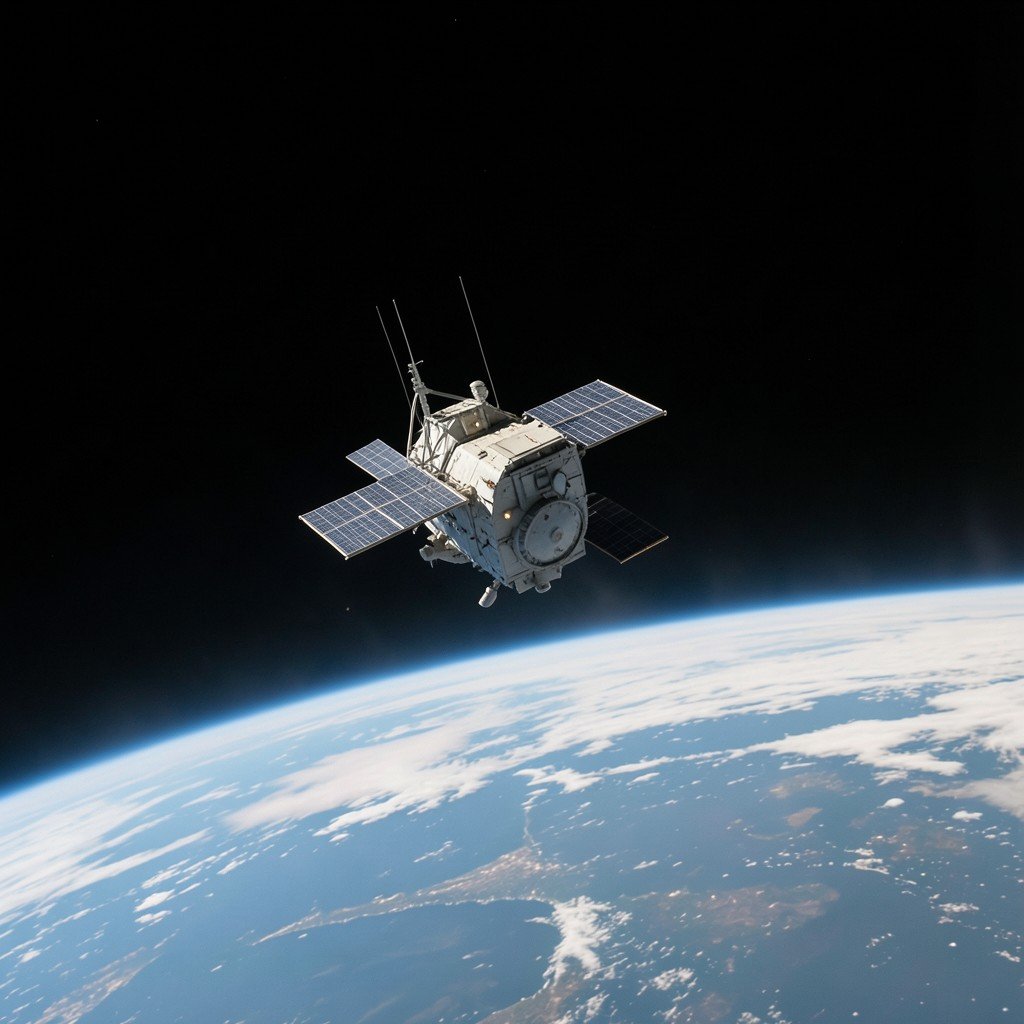
AI-generated representative image: A military satellite in Earth orbit, illustrating the US confirmation of space control weapons deployed in space.
Editorial Team
Editorial Team
Air Force Secretary Troy Meink's first official acknowledgement of on-orbit weapons draws warnings from China and Russia over space militarisation

The United States has acknowledged for the first time that it has deployed designed weapons in Earth's orbit. Air Force Secretary Troy Meink confirmed on Monday that the United States now has "on-orbit space control weapons capable of defending the Joint Force against hostile adversary action," speaking at the Air, Space and Cyber Conference.

Meink did not specify when the weapons were placed in orbit, how many exist, where they are positioned, or what they are designed to do. The announcement was framed as a message to US rivals China and Russia.

The disclosure marks a significant shift in the transparency surrounding the militarisation of space. Until now, officials had referred only to "systems with capabilities" rather than actual weapons, according to Victoria Samson, chief director of Space Security and Stability for the Secure World Foundation.

Experts warn the acknowledgement could accelerate an arms race in orbit, where satellites provide critical services such as GPS, communications and intelligence to both military forces and civilian infrastructure worldwide.

What the Announcement Reveals

Meink's statement is notable for what it leaves unsaid. The Air Force Secretary confirmed that "space control" capabilities "can be employed for offensive and defensive purposes," but offered no technical specifications. Experts believe the weapons are most likely space-based communications jammers or electronic warfare platforms rather than kinetic systems that launch physical strikes.

Bleddyn Bowen, an associate professor in astropolitics at Durham University, said he would expect "some kind of electronic warfare or radio-jamming platform," describing it as "a non-destructive kind of anti-satellite weapon" whose variants already exist on Earth. A kinetic kill vehicle that rams into and destroys a satellite was considered less likely, as such an approach would generate fast-moving debris.

Samson said this is "the first time any official has acknowledged an actually designed weapon has been placed in space," noting that prior language had always referred to "systems with capabilities."

The Legal and Institutional Framework

The US Space Force, the newest branch of the US military, was created in December 2019 under President Donald Trump's first term. Unlike NASA, which focuses on civilian exploration, Space Force operates under US Space Command and is responsible for protecting military satellites and supporting US forces on Earth. Its website states that China and Russia are "testing and fielding sophisticated counterspace capabilities."

The key legal instrument governing space is the 1967 Outer Space Treaty, which prohibits placing nuclear weapons or other weapons of mass destruction in orbit and bans military bases on celestial bodies. However, the treaty does not expressly prohibit conventional weapons in Earth's orbit, leaving room for anti-satellite weapons, electronic warfare systems and other counterspace capabilities.

Independent assessments indicate both China and Russia are developing broad counterspace capabilities. A 2025 report by the Center for Strategic and International Studies identified both countries as possessing direct-ascent anti-satellite weapons alongside jamming, spoofing and cyber operations. The Secure World Foundation has also documented space-based jammers in both nations.

Reactions and Global Implications

China's Foreign Ministry opposed the move, warning against the "weaponisation of outer space, turning it into a battlefield, as well as an arms race there." Spokesman Guo Jiakun urged the US "to stop expanding its military capabilities and preparing for war in outer space." Russia's Kremlin spokesman Dmitry Peskov called for space to be kept "free of any weapons" and backed "the complete demilitarisation of space."

The emerging space weapons race extends beyond the three major powers. India has demonstrated an anti-satellite capability, France is reported to be developing co-orbital capabilities, and the UK has conducted on-orbit cooperative operations with the US. A 2026 Secure World Foundation report notes Iran's growing reliance on jamming and spoofing, while Israel has developed significant military space and electronic warfare capabilities. North Korea and South Korea are also pursuing advanced space-based technology.

What Comes Next

Samson warned that Meink's statement "crosses a line" and could either encourage China and Russia to declare their own space weapons or prompt US allies to seek similar capabilities. "Counterspace capabilities have been proliferating already, this speeds up that trend," she said, describing the development as "incredibly destabilising."

A US Space Force spokesperson framed the disclosure as a deterrent measure, stating that "open communication strengthens deterrence, prevents adversary miscalculation, and normalises space operations." No timeline has been announced for further disclosures, and the technical details of the deployed weapons remain classified.

MORE LIKE THIS

Comments (0)

Leave a comment

A verified Gmail account is required to post comments.

No comments yet. Be the first to share your thoughts!