

Bangladesh Garment Worker Protests Turn Violent as 500 Factories Close
business

Bangladesh Garment Worker Protests Turn Violent as 500 Factories Close

By Editorial Team•Nov 2, 2026 · 3:00 PM•3 min read
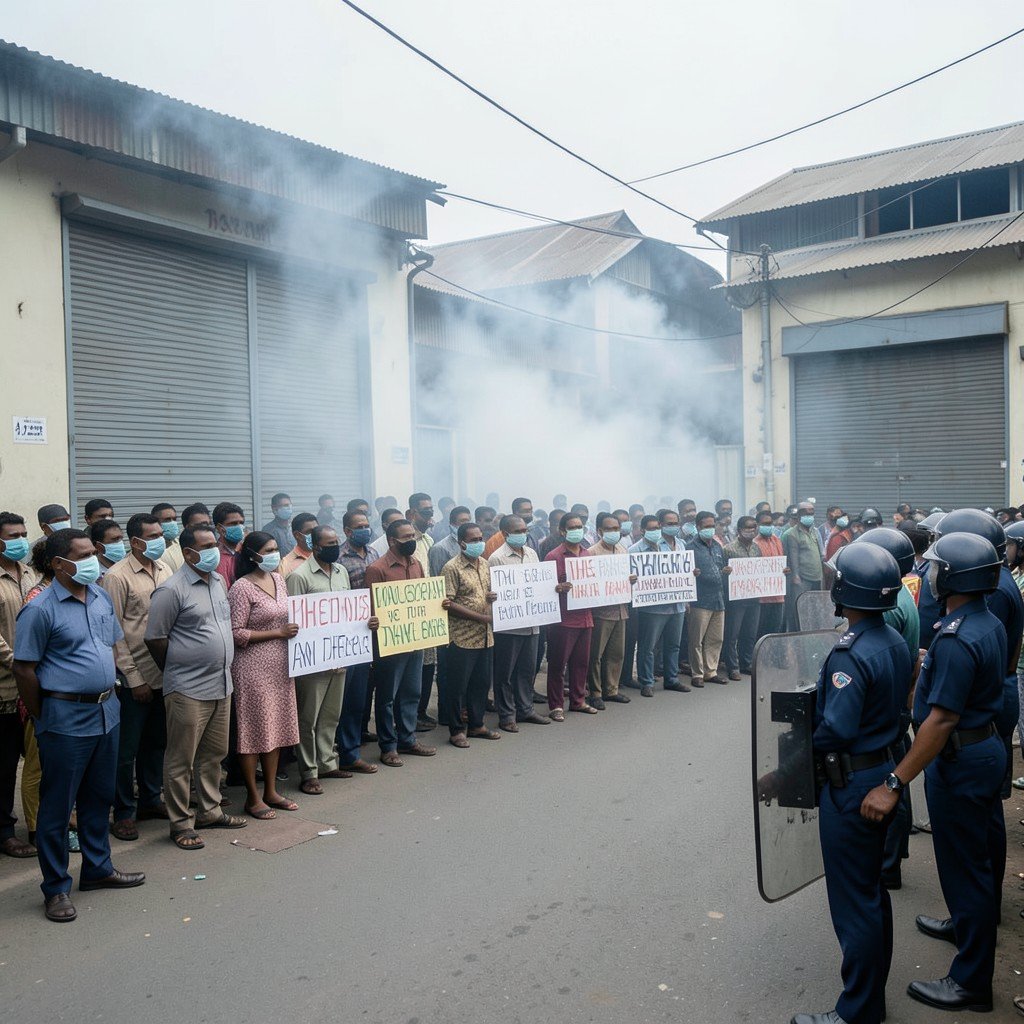
AI-generated representative image: Garment workers protest outside closed factories in Bangladesh amid a wage strike and clashes with police.
Editorial Team
Editorial Team
Wage strike disrupts the country's flagship export industry, affecting a million jobs and raising concerns over shipments to global buyers.

Fresh clashes erupted in Bangladesh on Monday between garment workers and police after a wage strike on Sunday forced the closure of more than 500 factories, affected around a million jobs, and raised concerns about disruptions to shipments destined for foreign buyers.

Workers in the readymade garments sector are demanding a monthly wage of 30,000 taka ($241), more than double their current pay of roughly 13,000 taka, according to Kalpona Akter of the Bangladesh Center for Workers Solidarity.

The unrest strikes at the heart of Bangladesh's economy. The readymade garments industry is the country's largest export sector, generating $39 billion in annual earnings and employing nearly 4 million workers. It accounts for 80 percent of Bangladesh's merchandise exports and contributes around 10 percent to gross domestic product.

Because Bangladesh is second only to China in global apparel exports and serves as a primary manufacturing base for mass-market retail, any prolonged disruption risks reverberating through international supply chains.

Escalating Clashes and Government Response

The demonstrations turned violent as workers took to the streets and vandalized vehicles, prompting police to fire tear gas to disperse the crowds. The strike intensified on Saturday, with workers saying their grievances extend beyond wages to surging living costs and high inflation.

  • More than 500 factories were closed following Sunday's strike.
  • Roughly one million jobs have been affected.
  • The government announced a wage board after an emergency cabinet meeting on Sunday.
  • The wage board, however, failed to placate workers, who continued their agitation.

Economic Pressures and Inflation

Bangladesh's annual inflation rate climbed to 8.34 percent in September, its highest level since June, intensifying pressure on household budgets and fueling worker discontent. The protests come at a difficult moment for an industry already competing with rival producers in India and Vietnam.

The Middle East conflict and the resulting energy crisis have pushed the sector to the brink, with higher fuel and shipping costs squeezing factory margins. Bangladeshi experts have cautioned that a substantial wage increase would raise manufacturing costs, shrink export profits, and weaken the country's price competitiveness.

Export Markets and Competitive Risks

The 27-nation European Union is Dhaka's largest export market, accounting for nearly half of its shipments. The United States follows as the single largest individual buyer, representing about a fifth of exports.

Industry observers have also noted that India's efforts to secure a competitive advantage in the US market have added to concerns among Bangladeshi garment producers, who fear losing ground to regional rivals at a time of rising costs and labor unrest.

What Happens Next

The newly announced wage board is expected to review the workers' demands, though no agreement has yet been reached and demonstrations have continued. Authorities have not confirmed a timeline for resolving the dispute, and further information on factory reopenings and shipment schedules is still awaited.

MORE LIKE THIS

Comments (0)

Leave a comment

A verified Gmail account is required to post comments.

No comments yet. Be the first to share your thoughts!