

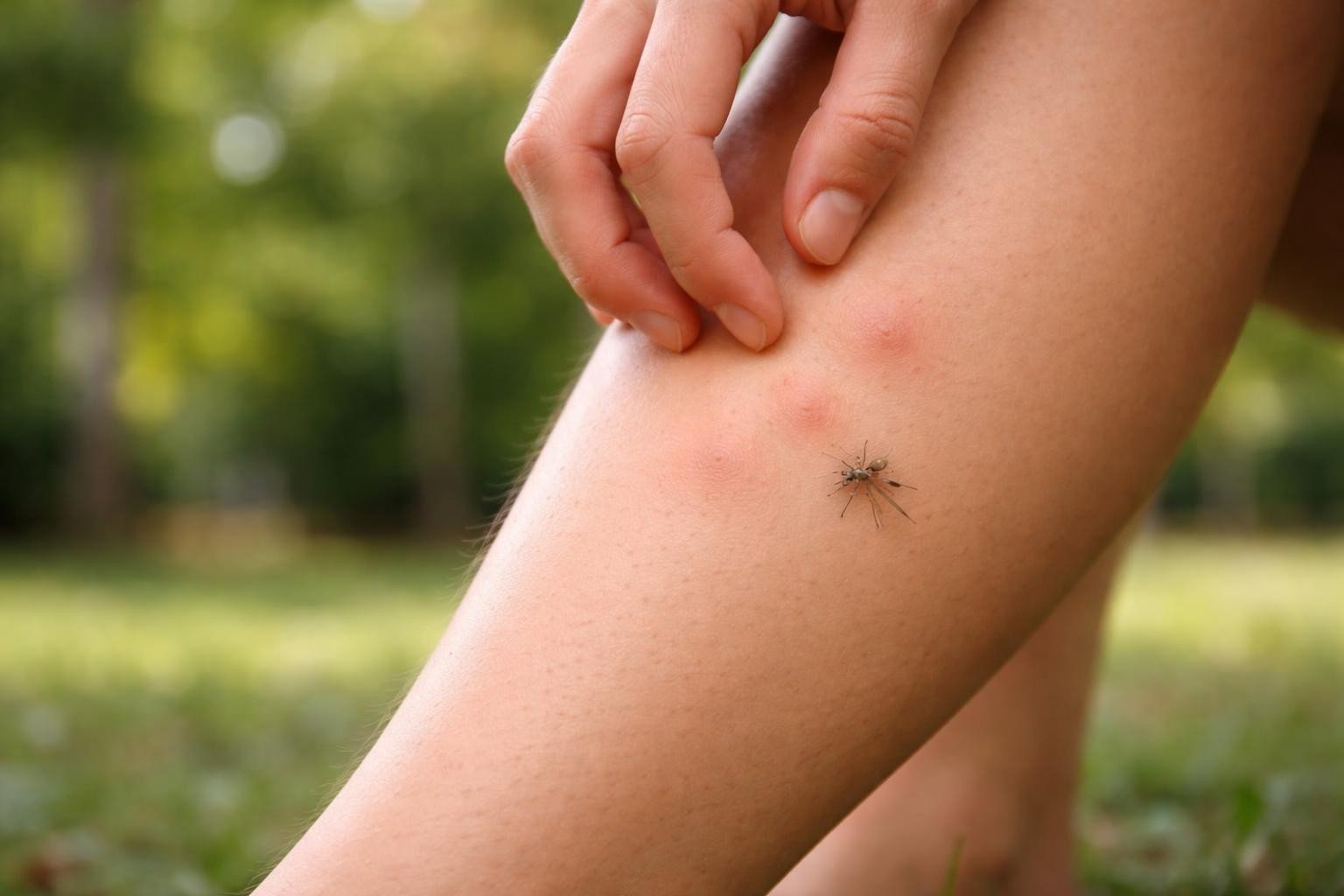

Mosquito bites: Why some people attract more, studies find
science-and-technology

Mosquito bites: Why some people attract more, studies find

By Editorial TeamJul 11, 2026 · 6:32 PM4 min read
AI-generated representative image of a mosquito on human skin, illustrating why some people get more mosquito bites than others.
Editorial Team
Editorial Team

Some people consistently attract more mosquito bites than others, and researchers say the difference is not simply down to chance. Studies cited by Voice of Urdu show that mosquitoes use a combination of chemical and physical cues especially carbon dioxide (CO2) from breathing, body odours from skin, and heat to find hosts. Factors such as pregnancy, alcohol consumption, clothing colour and a person’s skin microbiome can all influence how attractive someone is to different mosquito species.

Understanding why mosquitoes prefer certain people matters because mosquitoes are not just a nuisance: they can spread diseases such as malaria, dengue and Zika in many parts of the world. Research into mosquito attraction is helping scientists refine repellents, traps and other control tools, and it can also help individuals reduce their personal risk of being bitten especially during pregnancy, when some studies suggest bite risk may increase. For related health guidance, see Don't let allergies get out of hand during pregnancy.

Key findings from the research

  • Mosquitoes don’t “choose” people at random: they track hosts using multiple signals, including carbon dioxide (CO2), skin odours and body heat.

  • Carbon dioxide is a powerful long-range cue. People who exhale more CO2 often larger adults, and people who are physically active can be easier for mosquitoes to locate.

  • Skin odour is a major factor at close range. The mix of chemicals released from skin varies widely between individuals and can make some people more attractive to certain mosquito species.

  • The community of microbes living on human skin can change body odour and influence mosquito attraction.

  • Genetics can play a role, helping to explain why some people are bitten more frequently even in similar environments.

  • Pregnancy has been associated with increased mosquito attraction in some studies, including because pregnant people may exhale more CO2 and have higher body temperatures.

  • Alcohol consumption has been linked in research to increased attractiveness to mosquitoes in some circumstances.

  • What you wear can matter. Some mosquitoes are more attracted to darker colours, which may be easier to see.


How mosquitoes find humans

Researchers describe mosquito host-finding as a step-by-step process. From a distance, mosquitoes can detect carbon dioxide plumes created by human breathing. As they get closer, they rely more on odours from skin and sweat, and then use heat and moisture cues to decide where to land and bite.

Not all mosquitoes behave the same way. Different species have different preferences for hosts and for the types of chemical signals they rely on most. This helps explain why one person may be a magnet for mosquito bites in one setting, while another attracts more bites elsewhere.

What influences your bite risk

Body size, activity and CO2

Voice of Urdu reports that carbon dioxide is among the strongest signals drawing mosquitoes toward humans. People who emit more CO2 because of body size or physical exertion may be more detectable, particularly in still air where a CO2 plume can be tracked more easily.

Skin chemistry and microbes

Once mosquitoes are nearby, skin odours become increasingly important. Scientists have linked differences in attractiveness to the mix of chemicals produced by human skin and sweat and the microbes that live on the skin. Those microbes can alter odour by breaking down sweat into volatile compounds that mosquitoes can smell.

Temperature, pregnancy and other factors

Heat is another cue mosquitoes use at close range. Research cited by Voice of Urdu notes that pregnant people may attract more mosquitoes in some studies, potentially due to higher body temperatures and increased CO2 exhalation.

Additional factors discussed in the research include alcohol consumption and clothing colour, with darker colours sometimes associated with increased mosquito attraction.

Genetics

Scientists also point to genetic influences, which may affect skin chemistry, immune responses and the microbiome factors that can combine to make an individual more or less attractive to biting insects.

What you can do now

Researchers emphasise that no single factor determines who gets bitten, and reducing mosquito bites usually requires layered protection—particularly in areas where mosquitoes transmit disease. Practical steps commonly recommended by public-health authorities include using insect repellent, wearing long sleeves and trousers, using bed nets where appropriate, and reducing standing water where mosquitoes breed.

Scientists continue to study which specific skin chemicals and microbial combinations attract mosquitoes most strongly, with the aim of improving repellents and designing better lures for traps. Further research is also examining how differences between mosquito species affect which people they target most.

MORE LIKE THIS

Comments (0)

Leave a comment

A verified Gmail account is required to post comments.

No comments yet. Be the first to share your thoughts!