


Quantum Tunneling Discovery Boosts Triplet Energy Transfer at Room Temperature
science and technology

Quantum Tunneling Discovery Boosts Triplet Energy Transfer at Room Temperature

By Editorial TeamJul 27, 2026 · 5:39 AM3 min read
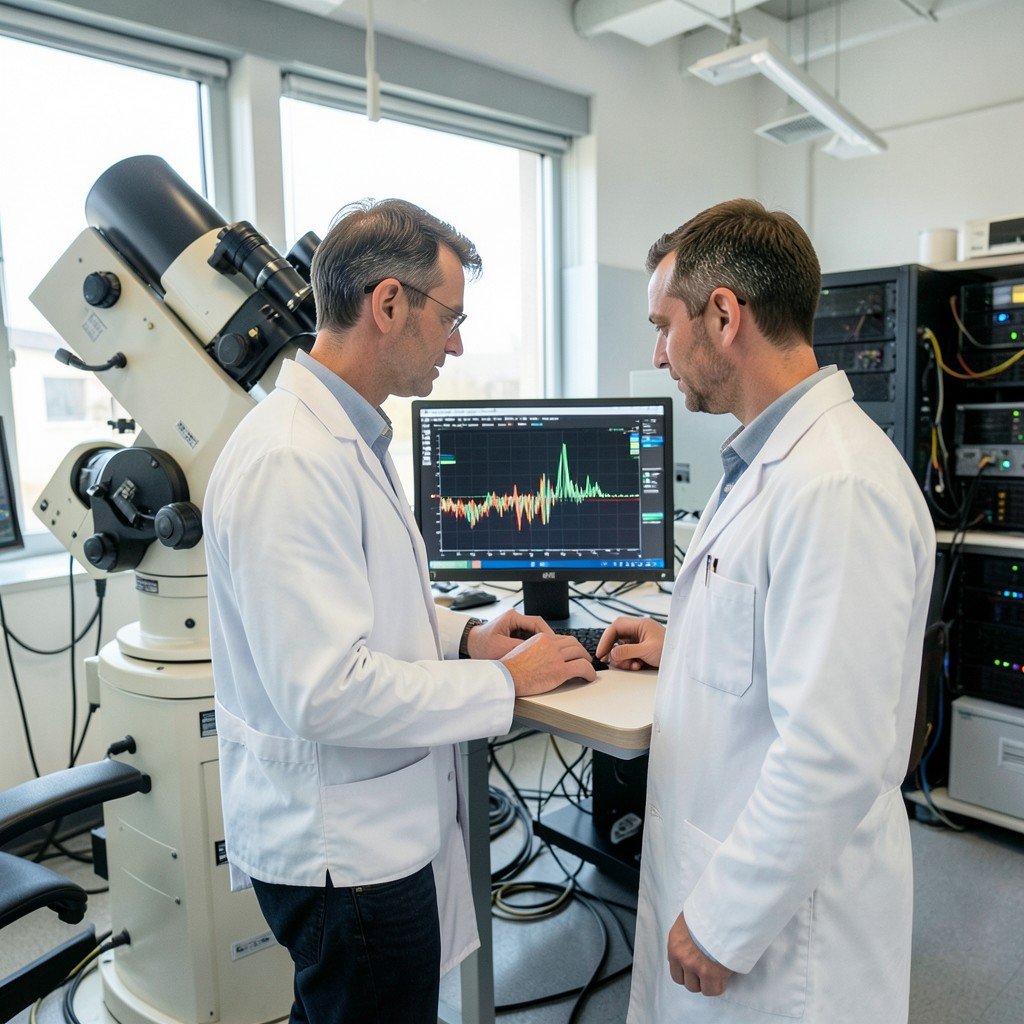
AI-generated representative image. A researcher works with quantum dot samples and laser spectroscopy equipment in a photochemistry laboratory.
Editorial Team
Editorial Team
Chinese researchers unveil a proton shuttle mechanism that harnesses quantum effects to accelerate triplet energy migration, opening new paths for solar cells, lasers, and catalysis.

A research team led by Prof. Kaifeng Wu at the Dalian Institute of Chemical Physics, Chinese Academy of Sciences, has discovered a previously unknown mechanism that dramatically enhances energy transfer using quantum mechanical tunneling at room temperature.

The mechanism, called proton shuttle-assisted triplet energy transfer (PS-TET), was observed as energy moved from ZnSe-based colloidal quantum dots to phenol-pyridine dyadic acceptors. The findings were published in Nature Materials.

The discovery demonstrates that quantum effects can be harnessed to control charge and energy flow in complex materials under ordinary conditions, challenging the assumption that such phenomena require ultra-cold environments. This opens new possibilities for tuning energy transfer in technologies ranging from solar cells and lasers to photoredox catalysis.

How the Proton Shuttle Mechanism Works

When ZnSe quantum dots absorb light and enter an excited state, a hole moves from ZnSe to phenol while a proton simultaneously shifts from phenol to pyridine. An electron then transfers from ZnSe to the phenoxyl radical as the proton moves back from pyridinium to its original location. These linked steps produce the overall movement of spin-triplet energy from the quantum dots to the phenol-pyridine dyads.

Although the proton ultimately returns to its starting position, its temporary movement greatly increases both the speed and efficiency of triplet energy transfer compared with a methylated analog lacking the proton shuttle. The researchers also found that adding a strongly electron-withdrawing trifluoromethyl substituent to pyridine can alter the sequence of proton-coupled electron and hole transfer steps.


Building on Prior Energy Transfer Research

The study extends earlier work on proton-coupled electron transfer (PCET) and proton-coupled energy transfer (PCEnT), two processes that link proton movement to charge and energy migration. Triplet energy transfer represents a major pathway for moving energy in both natural and synthetic systems but operates differently from singlet energy transfer, making it a distinct and important area of investigation.

Understanding how proton motion influences triplet energy transfer has long been a challenge. The Dalian team's work provides the first clear evidence of a proton shuttle mechanism that actively facilitates this process, filling a significant gap in the scientific understanding of energy migration in molecular systems.

Evidence for Quantum Tunneling

The rate of PS-TET showed very little variation with temperature, indicating that the proton does not move through a conventional heat-driven process. Instead, it appears to travel via quantum mechanical tunneling. Calculations involving proton vibrational wavefunction overlap integrals supported this interpretation, showing how these integrals determine which excited-state relaxation pathways are favored and steer the system toward efficient triplet energy migration.

"The discovery of the PS-TET mechanism has profound implications for many modern molecular technologies involving the spin-triplet excited states of molecules," Prof. Wu stated.

Practical Applications and Future Directions

The findings suggest scientists may be able to tune triplet formation as needed: creating a proton shuttle could enhance the process for applications like photoredox and environmental catalysis, while removing the shuttle could suppress unwanted triplet states in organic optoelectronic devices such as solar cells and lasers, where triplet formation can degrade performance.

MORE LIKE THIS

Comments (0)

Leave a comment

A verified Gmail account is required to post comments.

No comments yet. Be the first to share your thoughts!