

Brazil Presidential Election: Lula vs Flavio Bolsonaro in Tight Race
news

Brazil Presidential Election: Lula vs Flavio Bolsonaro in Tight Race

By Editorial Team•Oct 3, 2026 · 3:16 PM•4 min read
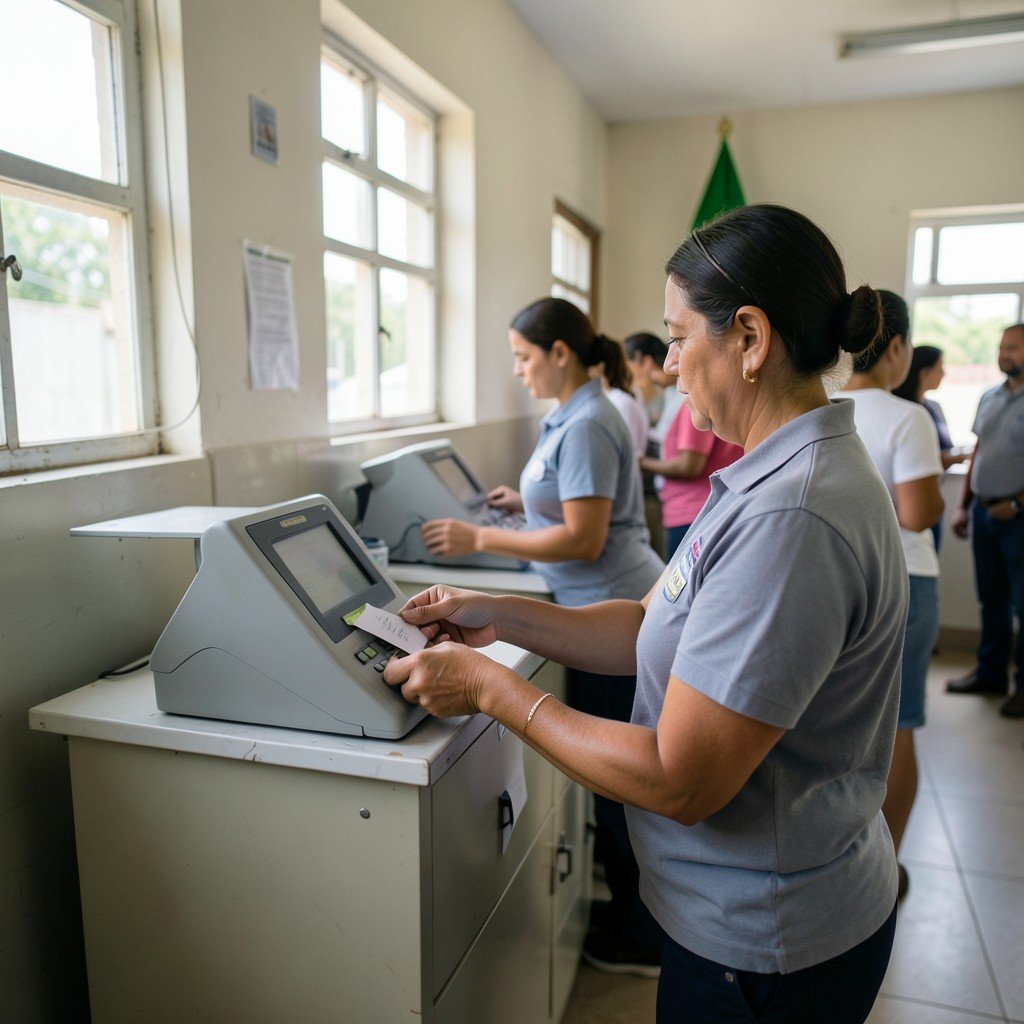
AI-generated representative image. A voter casts a ballot at a polling station in Brazil ahead of the October 4 presidential election between Lula and Flavio Bo
Editorial Team
Editorial Team
October 4 first round pits incumbent Lula against Bolsonaro's son amid corruption claims and US intervention fears

Brazilian voters go to the polls on October 4 in a presidential election that pits incumbent Luiz Inacio Lula da Silva against Senator Flavio Bolsonaro, the eldest son of imprisoned former president Jair Bolsonaro. Polls show the two candidates locked in a virtual tie, with a run-off likely on October 25 if neither secures an outright first-round victory.

The contest represents the second consecutive election in which Brazilian voters must choose between left-wing Lula and a right-wing candidate from the Bolsonaro family. The race unfolds amid a wave of far-right victories across Latin America, a corruption scandal touching figures across the political spectrum, and mounting concern over possible United States interference in Brazil's domestic affairs.

Key Election Facts

The first round of voting takes place on October 4 from 8am to 5pm Brasilia time (11:00 to 20:00 GMT). If no candidate wins outright, the top two contenders advance to a run-off on October 25.

Lula, 80, is seeking a fourth non-consecutive term as the Workers' Party candidate. His challenger, 45-year-old Flavio Bolsonaro, is running for the right-wing Liberal Party and has positioned himself as the heir to his father's political movement.

  • Jair Bolsonaro is serving a 27-year prison sentence for his role in a coup plot after losing to Lula in 2022.
  • A Quaest survey from September shows Lula at 37 percent against Flavio Bolsonaro's 33 percent.
  • An AtlasIntel survey shows Lula at 46 percent to Flavio Bolsonaro's 43 percent.
  • A Datafolha poll puts Lula at 40 percent and Flavio Bolsonaro at 36 percent.
Background and Political Context

Lula served two four-year presidential terms between 2003 and 2011 and began his current term in 2023. His tenure has focused on pairing democracy restored after a United States-backed military dictatorship that ruled until the 1980s with social programmes aimed at reducing inequality, as well as forging ties with developing, non-Western nations.

The conviction of Jair Bolsonaro and several military officers raised questions about the resilience of Brazilian democracy. Flavio Bolsonaro has sought to recast his father's conviction as political persecution, denouncing the trial as illegitimate and calling for his release.

Andre Pagliarini, an assistant professor of history and international studies at Louisiana State University, said the candidates "stand for such opposing visions about what Brazil's recent history means," describing the stakes as "incredibly stark."

Key Issues and Voter Concerns

A Quaest survey from September 7 found that 31 percent of respondents cited violence as their biggest concern, followed by 20 percent citing corruption, 19 percent the economy, and 12 percent health. Flavio Bolsonaro leads on inflation, corruption, and crime and drug trafficking, while Lula is viewed more favourably on poverty and inequality, foreign affairs, and health.

An explosive corruption scandal centred on disgraced banker Daniel Vorcaro has touched both campaigns. Reports found Flavio Bolsonaro solicited substantial funds from Vorcaro, while Lula's former finance minister Guido Mantega said he helped arrange a meeting with Vorcaro, Lula and the central bank chief. The scandal has also embroiled Supreme Court justices, with the court considering probes into the conduct of two of its members.

What Lies Ahead

Concern over United States intervention has escalated after Brazil denied visas to two US officials who sought to travel to the country to cast doubt on election integrity. A group of 31 Democratic US congress members sent a letter to Secretary of State Marco Rubio criticising "an apparent effort to interfere with, and potentially undermine" Brazilian elections.

With most surveys showing a close race and a hypothetical run-off tightening further, the outcome remains uncertain. Analysts describe a "downbeat campaign" with limited enthusiasm on either side, making the first-round result difficult to predict.

MORE LIKE THIS

Comments (0)

Leave a comment

A verified Gmail account is required to post comments.

No comments yet. Be the first to share your thoughts!