

Gaza Healthcare Workers Battle Trauma While Treating War Wounded
news

Gaza Healthcare Workers Battle Trauma While Treating War Wounded

By Editorial Team•Nov 1, 2026 · 10:12 AM•4 min read
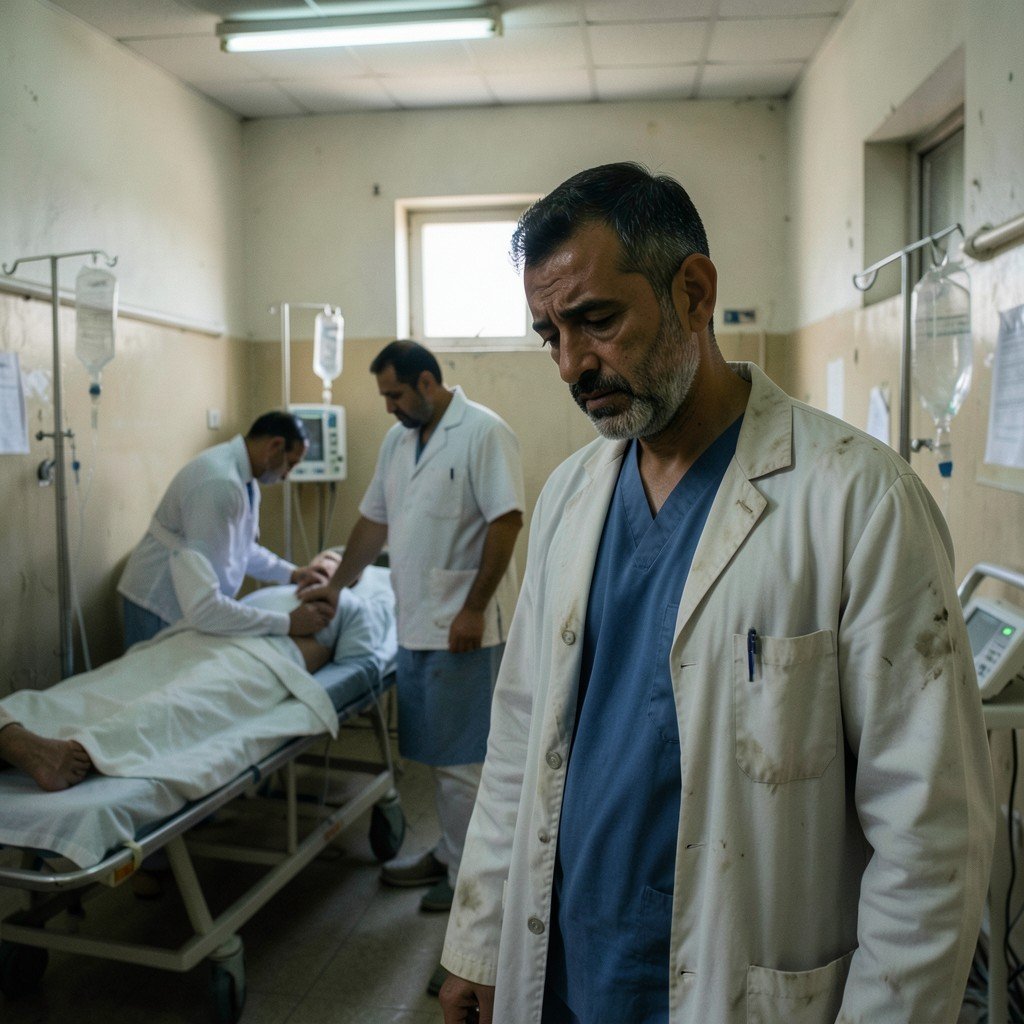
AI-generated representative image: A doctor inside a Gaza hospital ward, reflecting the psychological toll on medical workers treating war wounded.
Editorial Team
Editorial Team
Doctors and nurses grieving lost families face a mental health crisis hollowing out Gaza's medical workforce

Medical workers in Gaza are facing a deepening psychological crisis after more than two years of war, with many treating the wounded while grieving their own family members killed in Israeli attacks. At least 1,700 medical personnel have been killed and 83 healthcare workers remain in Israeli detention, according to Gaza's Government Media Office, but the figures do not capture the invisible toll of bereavement, displacement and burnout among those still on duty.

At Al-Aqsa Martyrs Hospital in Deir el-Balah, anaesthesiologist Manar Fayyad, 29, discovered his brother Shadi among the critically injured brought into the operating room on December 27, 2023. He died before Fayyad could reach him.

The trauma suffered by doctors and nurses is now threatening the survival of Gaza's already devastated healthcare system. With so many staff killed, detained or injured, those who remain are overworked and largely without access to mental health services, prompting fears of a medical brain drain that could leave the territory without enough trained personnel to care for the wounded.

Personal Losses Among Medical Staff

Fayyad has been unable to continue working since identifying his brother, ending his career prematurely. He has withdrawn from social life, avoids crowds and noise, and copes alone without professional help, finding some relief in writing and sitting by the sea while considering leaving Gaza.

Khaled Raafat, 29, an emergency department nurse at the same hospital, lost his wife, children, mother and several siblings when an Israeli air strike hit his family home on October 18, 2023. He was at the hospital at the time. Raafat stepped away from work for an extended period before deciding to rebuild his life, remarrying and starting a new family, and eventually returning to his duties.

Nurse Hiba al-Tawil, 39, witnessed her brother's death in the intensive care unit at the Nasser Medical Complex in Khan Younis, where she worked. She later transferred to another department to distance herself from the place where he died.
War's Toll on the Health System

Israel's war on Gaza began in October 2023. Since then, medical personnel have endured prolonged displacement, relentless workloads and daily exposure to horrific injuries and death, often while grieving colleagues, friends and relatives.

A study published in the Public Library of Science found that 41 percent of healthcare workers reported losing family members, while 46 percent experienced both personal bereavement and displacement from their workplaces. At least 78 percent lacked access to mental health services, a gap that has made it difficult for the health system to retain its remaining staff.

Official reports have acknowledged a "loss of human resources" and "diminished capacity in the healthcare system," though the exact number of doctors and nurses who have left Gaza or abandoned their jobs remains difficult to assess. The shortage of replacement staff, continuing arrivals of wounded patients and shortages of equipment have compounded the pressure on those still working.

Official Response and Treatment Efforts

Munir al-Bursh, director general of Gaza's Ministry of Health, said medical workers are "caught between their professional duty to save lives and the pain of losing the people closest to them." He stressed that protecting personnel requires more than securing medicines and equipment.

"It also means safeguarding their mental health and giving them time to rest and recover," he said. "Those who save others also need someone to reach out and help them."

At the Nasser Medical Complex, a psychological clinic treats doctors and nurses struggling with trauma. Reham Abu Rokba, a psychologist there, said treatment begins with assessing a patient's condition and diagnosing symptoms. For post-traumatic stress disorder, cognitive behavioural therapy may be used, typically over about 12 individual sessions, with medication added when necessary. Recovery, she noted, requires time and ongoing participation in support sessions.

What Lies Ahead

The acute shortage of medical staff makes it difficult to give the remaining workforce adequate time to recover, according to health officials. Continued psychological and social support is seen as essential to halting the brain drain and protecting those who have experienced trauma. No confirmed timeline or comprehensive government programme for expanding mental health services has been announced, and further information on staffing losses and recovery efforts remains awaited.

MORE LIKE THIS

Comments (0)

Leave a comment

A verified Gmail account is required to post comments.

No comments yet. Be the first to share your thoughts!