US Iran Diplomatic Opening as War Talks Gain Momentum
news

US Iran Diplomatic Opening as War Talks Gain Momentum

By Editorial Team•Nov 10, 2026 · 8:11 PM•4 min read
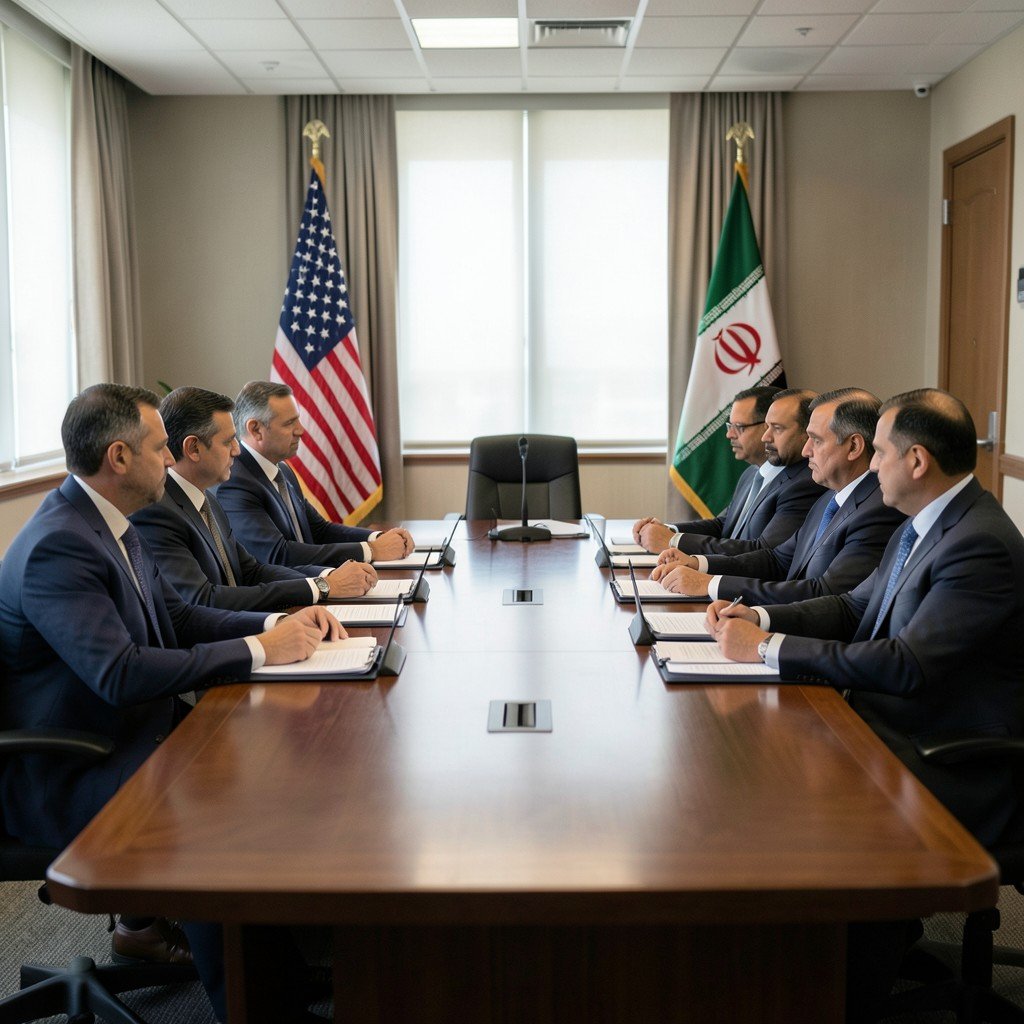
AI-generated representative image. Formal diplomatic negotiations between US and Iranian officials in a government meeting room amid ongoing war talks.
Editorial Team
Editorial Team
Trump signals war effectively over after White House talks with Qatar, but military posturing keeps a full settlement uncertain

Diplomatic efforts to end the United States-Israel war on Iran have gathered pace, with US President Donald Trump and Qatar's Prime Minister Sheikh Mohammed bin Abdulrahman bin Jassim Al Thani hailing positive closed-door talks at the White House on Monday. Trump said he now considers the war "effectively" at an end, while describing negotiations with Tehran as "going very well."

Despite the optimistic signals, both sides continue to maintain military readiness, and Iran has come under renewed attack, leaving the prospect of a durable settlement uncertain.

The shift toward diplomacy carries significant consequences for global energy markets, consumer prices and regional stability. Oil prices fell sharply on Monday amid renewed hopes for talks, easing inflation concerns, and a breakthrough could produce a sustained reduction in energy costs.

Analysts say the political and strategic costs of further escalation are growing, making another round of large-scale war less likely even as key disagreements remain unresolved.

Major Diplomatic Developments

  • Trump and Qatar's prime minister held positive closed-door talks at the White House on Monday, with Trump calling the war "effectively" at an end.
  • Iranian Foreign Minister Abbas Araghchi said on Tuesday the war would "not end either through military means or by increasing sanctions," but only through "using the language of respect."
  • Iranian President Masoud Pezeshkian said Supreme Leader Mojtaba Khamenei had hinted at openness to negotiations and urged the country's leadership to end the "no war, no peace" reality.
  • US House Minority Leader Hakeem Jeffries, expected to become House speaker in January, said the Democratic Party will "end the war in Iran one way or the other."
  • Outgoing Republican lawmaker Thomas Massie moved to impeach US Defense Secretary Pete Hegseth over the war.

Domestic and Regional Pressures

The crushing Republican defeat in the US midterm elections earlier this month has injected new life into stalled talks. Trump and Vice President JD Vance both acknowledged that the conflict, which rattled global energy markets and contributed to rising living costs, played a significant role in the Democratic Party taking firm control of Congress.

Negar Mortazavi, a senior non-resident fellow at the Center for International Policy in Washington, DC, said the Republican losses "dramatically raised the political cost of more escalation," adding that progressive and antiwar candidates pushed the party toward a stronger and more united opposition to war.

Trump's main wartime ally, Israeli Prime Minister Benjamin Netanyahu, also faces an uncertain political future after the October 27 general election. His rival Gadi Eisenkot was tasked on Saturday with forming a new government coalition that can survive opposition from Netanyahu's right-wing bloc.


Iranian Conditions and Military Posture

Iran's Supreme National Security Council Secretary Mohsen Rezaei on Monday accused Washington of spreading "fake news" about potential negotiations, demanding that the US accept Tehran's seven conditions, including the removal of the naval blockade and the unfreezing of Iranian assets.

Hamidreza Azizi, a senior Iran analyst at the International Crisis Group, said accepting these terms "would come at a huge cost" for the Trump administration. "Reaching a diplomatic arrangement without securing any nuclear concessions from Iran would amount to an admission of defeat, and the Americans seem reluctant to accept that," he said.

US attacks against Iranian targets in the Strait of Hormuz and on the island of Qeshm have been a daily occurrence, while Tehran has responded by downing US aircraft and controlling marine traffic on the key waterway. The USS Theodore Roosevelt carrier strike group and the US 13th Marine Expeditionary Unit with its Makin Island Amphibious Ready Group are expected to reach the Middle East later this month.

What Lies Ahead

Analysts say Trump must now decide whether to accept a negotiated end to the war or prolong a conflict with diminishing political support. One scenario could see the US naval blockade on Iranian ports continue in hopes of securing more concessions, though Azizi warned this is inherently unsustainable because Tehran views the blockade as a continuation of the war.

No formal breakthrough has been confirmed, and additional information on the status of negotiations is still awaited.

MORE LIKE THIS

Comments (0)

Leave a comment

A verified Gmail account is required to post comments.

No comments yet. Be the first to share your thoughts!