

Eisenkot Open to Netanyahu in Israel's Next Coalition Government
news

Eisenkot Open to Netanyahu in Israel's Next Coalition Government

By Editorial Team•Nov 8, 2026 · 7:47 PM•3 min read
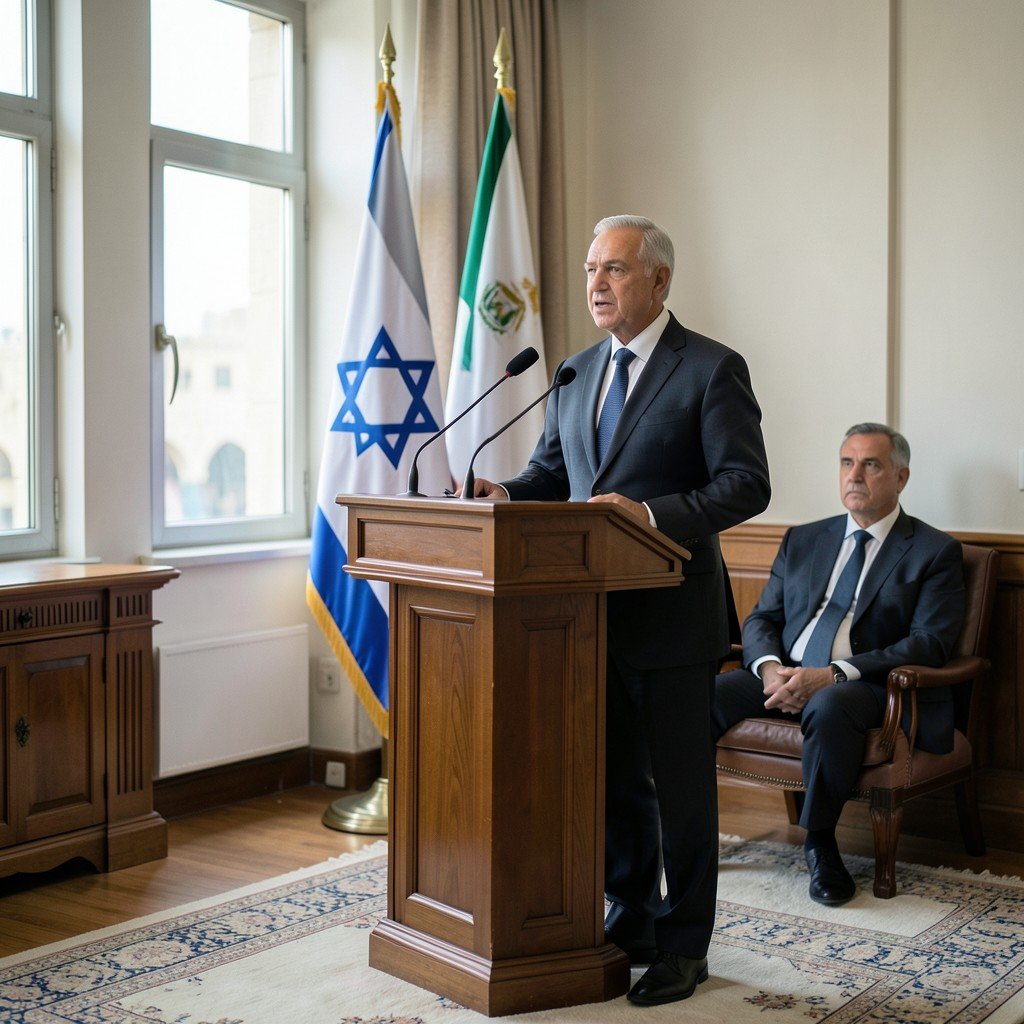
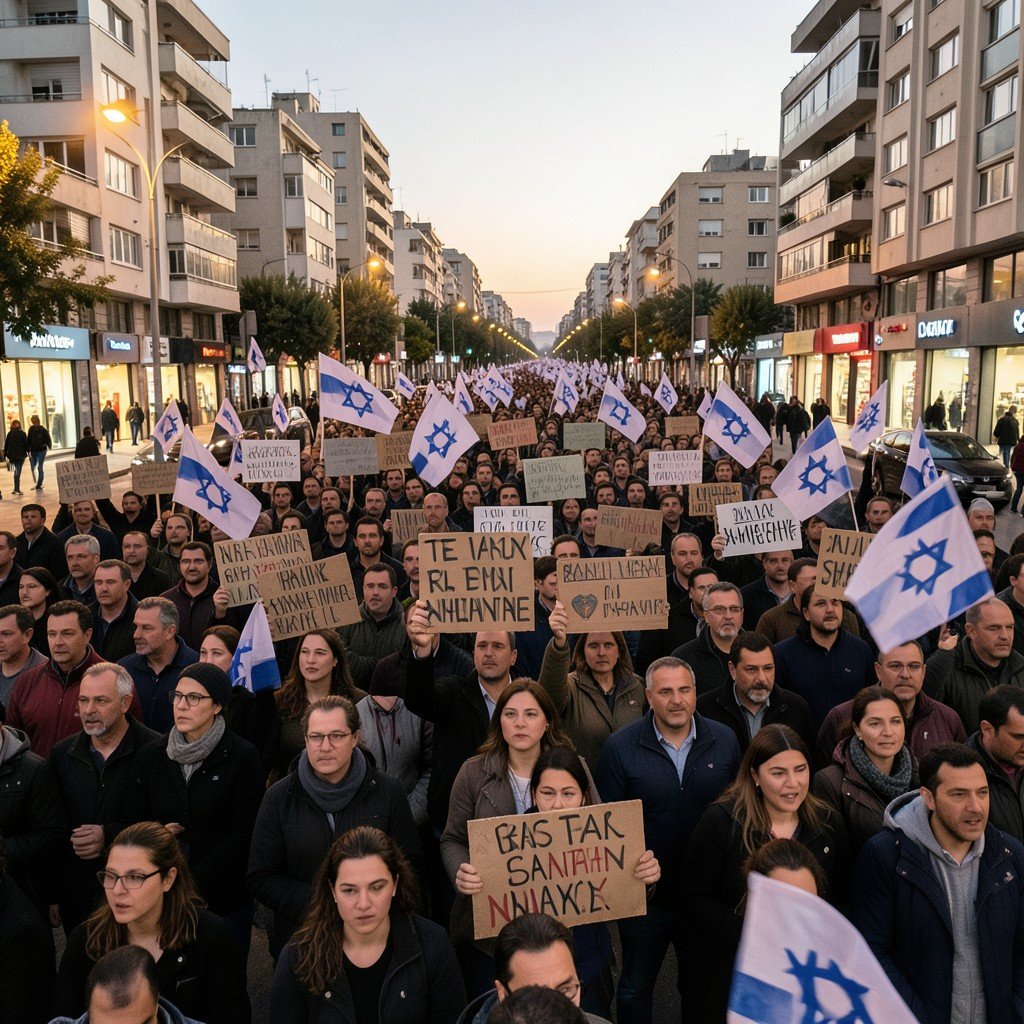
AI-generated representative image. A political leader addresses an official ceremony as Israel's next government coalition talks begin.
Editorial Team
Editorial Team
Opposition leader tasked with forming Israel's next government signals unity could extend to Likud and the Religious Zionist Party

Israel's opposition leader Gadi Eisenkot, officially tasked by President Isaac Herzog with forming the country's next government, said on Sunday that he was open to including Prime Minister Benjamin Netanyahu in his coalition lineup. Speaking at a ceremony in Herzog's office in Jerusalem, Eisenkot also suggested that far-right Finance Minister Bezalel Smotrich would be welcome to join.

The invitation marks a notable shift in Israel's post-election maneuvering, where neither Eisenkot's bloc nor Netanyahu's secured a parliamentary majority. The outcome of coalition talks will determine whether Netanyahu remains in power, returns to government under a rival, or the country heads to fresh elections.

Coalition Formation Underway

Eisenkot, who ran as Netanyahu's main rival, has six weeks to form a new government. At Sunday's ceremony, he said he would act in the interests of the public and represent all parts of Israeli society.

"If members of Likud and the Religious Zionist Party truly believe this is a time for unity, as they told the president, I cannot conceive of any reason why they would not support a government under my leadership and the principles I have presented," Eisenkot said.

Herzog, meanwhile, warned that the country faced uncertainties following the November 3 midterm elections in the United States, which brought victories for several political figures critical of Israel and Washington's military support. "The State of Israel needs a stable government," Herzog said, pointing to the "new political reality" in the US.
Election Results and Political Landscape

In Israel's October 27 elections, Eisenkot's four-party alliance won 48 seats, while Netanyahu's right-wing and religious bloc secured 53, leaving both short of the 61 needed for a parliamentary majority. Arab-led parties, representing Palestinian citizens of Israel, won a record 19 seats.

Eisenkot has ruled out forming a government with the Arab-led parties, a move that would have given him a 67-seat bloc. Winning over the two ultra-Orthodox parties, United Torah Judaism and Shas, would give him exactly 61 seats. He could also form a government with fewer than 61 seats if he wins a parliamentary confidence vote.

Eisenkot led Israel's military from 2015 to 2019 and sat as an observer in Netanyahu's war cabinet for the first eight months of the war on Gaza, which began in October 2023. Despite this, Arab-led parties endorsed Eisenkot for the mandate to replace Netanyahu.

Analysts Weigh In on Netanyahu's Strategy

"Netanyahu still has time to derail Gadi Eisenkot's efforts to form a government and sabotage attempts to gain a vote of confidence," said Nour Odeh, reporting from Ramallah in the occupied West Bank.

"In the meantime, he remains caretaker prime minister. If Eisenkot fails, Netanyahu would be the natural second in line to be tasked with forming a government. And if he fails, elections would then be called, and that would still allow Netanyahu to remain as caretaker."

Odeh added that many of Netanyahu's critics believe prolonging the stalemate is his aim. The central question now, she said, is whether the opposition genuinely wants to remove Netanyahu or whether opposition to Palestinian Israelis in mainstream politics is strong enough to risk keeping him in power through a return to the ballot box.

What Happens Next

Eisenkot now has six weeks to assemble a governing coalition. If he succeeds, Netanyahu could still join the government under his leadership. If Eisenkot fails, Netanyahu would be next in line to attempt forming a government, and a further failure would trigger new elections while Netanyahu remains caretaker prime minister.

MORE LIKE THIS

Comments (0)

Leave a comment

A verified Gmail account is required to post comments.

No comments yet. Be the first to share your thoughts!