


Typhoon Dolphin Slams Okinawa, Cuts Power to 50,000 Buildings
news

Typhoon Dolphin Slams Okinawa, Cuts Power to 50,000 Buildings

By Editorial TeamAug 8, 2026 · 6:52 PM3 min read
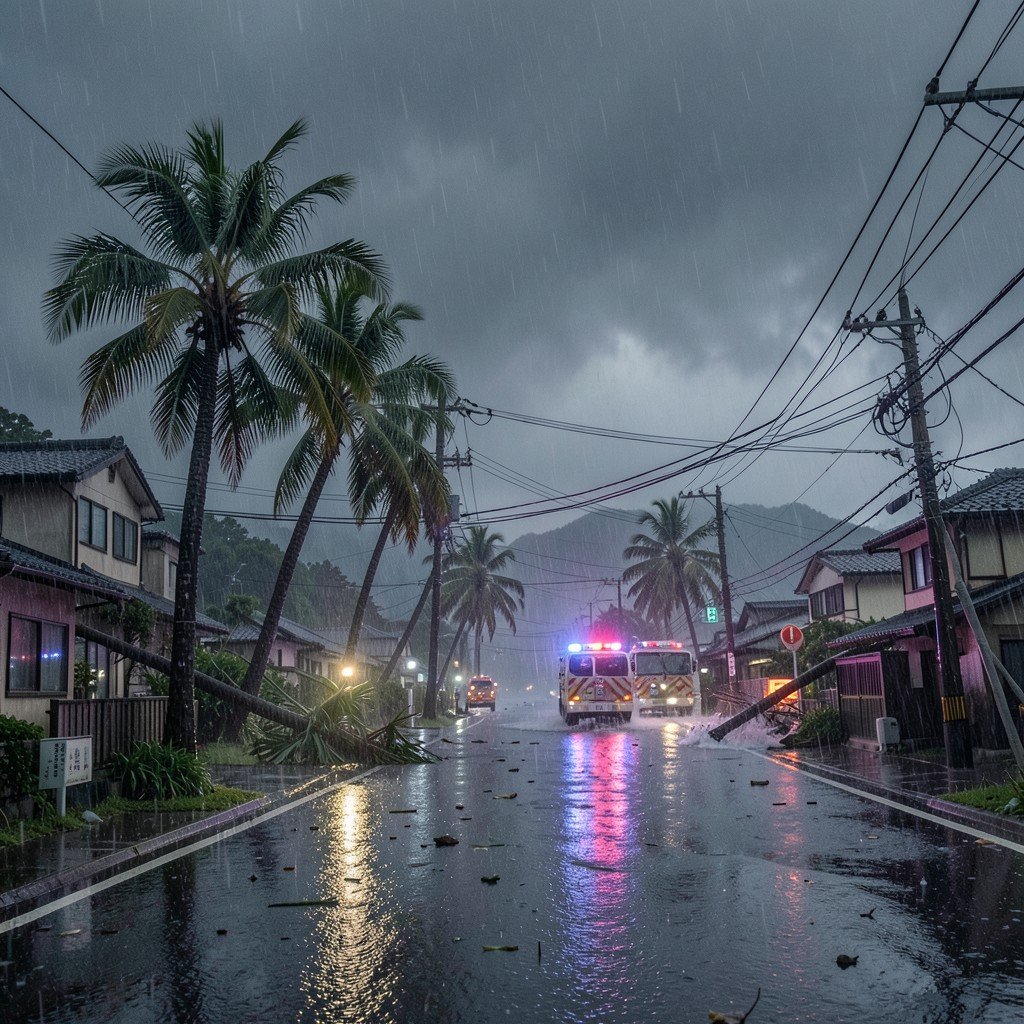
AI-generated representative image. Powerful winds and heavy rain batter a residential area in Okinawa as Typhoon Dolphin knocks out power to thousands of buildi
Editorial Team
Editorial Team
Six injured as 162 kph storm triggers mass evacuations in southern Japan before tracking toward China's eastern coast

Typhoon Dolphin struck Japan's southern Okinawa island on Saturday, injuring six people and cutting electricity to more than 50,000 buildings as it tracked westward toward China's eastern coast.

The storm brought maximum sustained winds of 162 kilometers per hour and gusts reaching 216 kph, prompting authorities to order nearly 260,000 residents to evacuate across Kagoshima and Okinawa prefectures a day earlier.

The typhoon is the latest in a series of powerful storms to impact the Western Pacific region, disrupting daily life across southern Japan and now threatening densely populated coastal areas of China. The back-to-back emergencies in both countries underscore the growing strain on disaster response systems during the peak typhoon season.

Storm Impact Across Southern Japan

Local officials confirmed that five elderly residents in Okinawa sustained non-life-threatening injuries, while a sixth person was injured in Kagoshima prefecture. Power outages affected nearly 39,000 buildings in Kagoshima and more than 12,000 in Okinawa.

Major Japanese airlines canceled flights to and from Okinawa as the storm disrupted travel across the region. Evacuation orders issued Friday covered approximately 260,000 residents, with authorities warning of violent winds, heavy rainfall and dangerously high waves.


Typhoon Season and Regional Preparedness

The Western Pacific typhoon season typically runs from May through October, with peak activity occurring between July and September. Japan's southern islands, particularly Okinawa, are frequently in the path of tropical cyclones due to their geographic position in the Pacific.

China maintains a four-tier color-coded emergency response system for typhoons, ranging from blue (lowest) to red (highest). The elevation to Level III and the orange classification for Dolphin indicates authorities consider the storm capable of causing significant damage to infrastructure, agriculture and coastal communities.

China's Emergency Measures

Chinese authorities have suspended port operations and ferry services in coastal areas expected to be affected by the storm. Schools and tourist sites have also been closed as a precautionary measure. Forecasts predict heavy rainfall of up to 400 millimeters in parts of eastern China, raising concerns about potential flooding and landslides.

Dolphin is projected to make landfall between Zhoushan in Zhejiang province and Fuding in Fujian province between late Sunday and early Monday. Meteorologists expect the typhoon to weaken as it approaches the Chinese mainland.

What Lies Ahead

Typhoon Dolphin continues moving toward China's eastern seaboard, where emergency response teams remain on high alert. China's Level III emergency designation remains in effect as coastal communities brace for heavy rainfall, possible flooding and potential landslides. Authorities are expected to reassess the storm's trajectory and intensity as it approaches landfall late Sunday.

MORE LIKE THIS

Comments (0)

Leave a comment

A verified Gmail account is required to post comments.

No comments yet. Be the first to share your thoughts!