

US Removes Syria From State Sponsors of Terrorism List
news

US Removes Syria From State Sponsors of Terrorism List

By Editorial TeamAug 26, 2026 · 5:11 PM4 min read
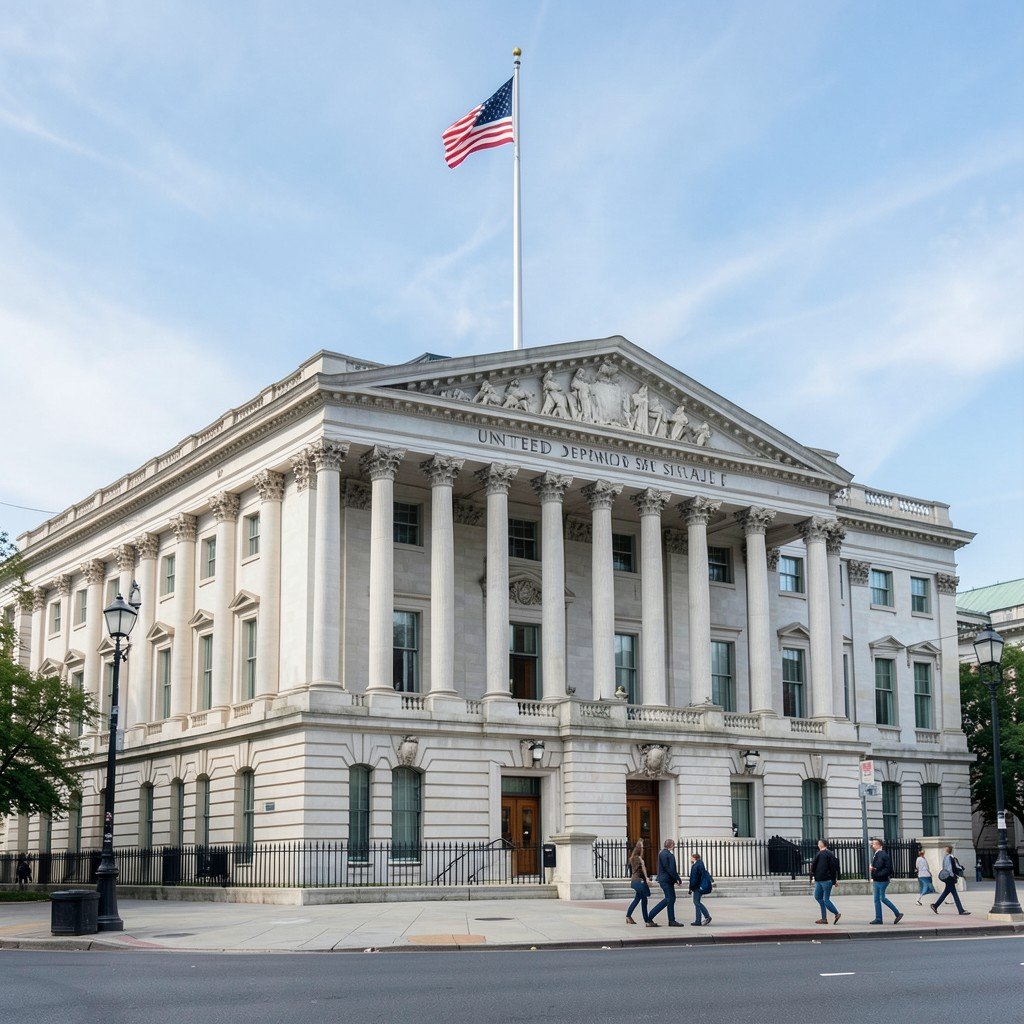
AI-generated representative image: The US State Department building in Washington, D.C., following the removal of Syria from the State Sponsors of Terrorism lis
Editorial Team
Editorial Team
Washington ends the decades-old designation after a 45-day review, leaving Cuba, Iran and North Korea on the sanctions list.

The United States has removed Syria from its State Sponsors of Terrorism (SSOT) list, a designation that had been in place since 1979. The change took effect following a 45-day congressional review after President Donald Trump announced the planned removal in July.

Syrian President Ahmed al-Sharaa welcomed the decision in a speech on Tuesday, saying the country "shakes off a dark stain and tears away a painful chapter of its past to embark on a path of development, reconstruction and rebuilding."

The removal marks another significant shift in Washington's relationship with Syria following the fall of the Bashar al-Assad regime in December 2024, which ended a 14-year civil war. It leaves Cuba, Iran and North Korea as the only countries still on the US terrorism blacklist.

For Syria, lifting the designation removes a major obstacle to foreign investment and access to the international financial system, with analysts saying it could make trade and diplomatic relations more attractive.

Major Policy Shift

The SSOT designation had triggered restrictions on foreign assistance, defence exports, certain financial transactions and the transfer of some dual-use goods. It also made banks and companies wary of doing business with Syria because of legal and compliance risks.

US Secretary of State Marco Rubio said the decision followed "formal assurances" from al-Sharaa that Syria will not "support acts of international terrorism in the future." Washington has also praised cooperation between al-Sharaa's government and the US against the ISIL (ISIS) armed group. Rubio said lifting the designation will "unlock international trade and investment" and give Syria a chance to rebuild.
Historical Context

Syria was first placed on the SSOT list in 1979, when Washington accused the government of Hafez al-Assad of supporting armed groups opposed to Israel. The designation continued when Bashar al-Assad assumed power in 2000 and lasted for the entirety of his rule, ending only after he was overthrown in a lightning strike on Damascus by rebel groups led by al-Sharaa in December 2024. Al-Assad and his family fled Syria and are currently under supervisory asylum in Moscow.

Al-Sharaa previously led the al-Nusra Front, an al-Qaeda affiliate, before breaking ties in 2016. The terrorism-sponsor designation had remained a major obstacle for potential investors in Syria even after Washington dismantled its broader Syria sanctions programme in 2025.

Remaining Countries and Their Designations

Iran has been designated a state sponsor of terrorism since 1984, with Washington accusing Tehran of supporting armed groups including Hezbollah in Lebanon, Yemen's Houthi group and various groups in Iraq and Syria. On Monday, the US announced sweeping new economic sanctions on Tehran and entities in other countries that Washington says facilitate trade with it.

Cuba was first placed on the list in 1982. Former President Barack Obama removed the country in 2015, but Trump restored the designation in January 2021. The Biden administration announced in January 2025 that it intended to remove Cuba again, but Trump reversed that decision after returning to office. Since January 29, the Trump administration has imposed a fuel blockade against Cuba and threatened trade tariffs on countries exporting fuel there.

North Korea was first listed in 1988 largely because of its role in the 1987 bombing of Korean Air Flight 858, which killed all 115 people on board. It was removed in 2008 during nuclear negotiations but restored in 2017 during Trump's first term, remaining listed due to its nuclear and missile programmes.

What Lies Ahead

Syria's removal is now formally in effect, and Rubio has indicated the move is intended to unlock international trade and investment. Analysts note that the SSOT list functions less as an objective terrorism registry and more as a foreign-policy pressure valve, with the absence of similar relief for Cuba, Iran and North Korea meaning continued isolation from mainstream global finance.

MORE LIKE THIS

Comments (0)

Leave a comment

A verified Gmail account is required to post comments.

No comments yet. Be the first to share your thoughts!