Hamas appoints Khalil al-Hayya as political bureau chief
features

Hamas appoints Khalil al-Hayya as political bureau chief

By Editorial TeamJul 20, 2026 · 4:30 PM4 min read
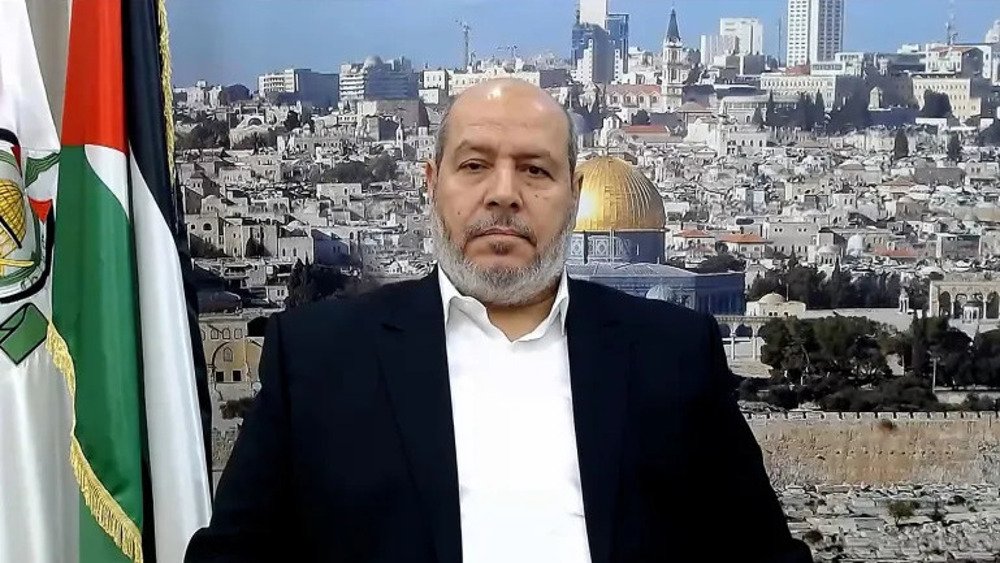
Khalil al-Hayya, the new head of the political bureau of the Palestinian Hamas resistance movement
Editorial Team
Editorial Team
Wartime Shura Council run-off names veteran Gaza negotiator

Hamas has announced that Khalil al-Hayya has been elected as the Palestinian group’s new head of its political bureau, following an internal wartime election process. His selection was decided through a run-off vote inside Hamas’s General Shura Council after neither candidate initially secured the required majority.

Al-Hayya takes over after the previous leader, Yahya Sinwar, was killed by the Israeli army in the Gaza Strip in 2024, after Sinwar had replaced political chief Ismail Haniyeh who was assassinated earlier that year.

The appointment places a long-time Hamas official and negotiator at the movement’s top political post at a time when its leadership has been repeatedly reshaped by targeted killings and ongoing military operations. The decision also highlights Hamas’s emphasis on formal internal procedures, even during conflict, and signals continuity in the group’s external engagement on ceasefire and captive exchange talks.

Leadership transition and internal vote

  • Khalil al-Hayya was elected head of Hamas’s political bureau following a run-off against former political chief Khaled Meshaal, after earlier voting failed to produce the required 50 percent plus one majority.
  • The vote was conducted by Hamas’s General Shura Council, which under the group’s regulations holds exclusive authority to choose the political bureau chief rather than relying on a direct grassroots ballot.
  • Al-Hayya’s selection aligns with Hamas’s internal 2021 framework that requires top leadership roles to reflect the movement’s key geographical sectors: Gaza, the occupied West Bank and the diaspora.
  • He will serve out the remainder of the current electoral term, which runs through 2027, after previously joining a temporary five-man ruling council formed in late 2024 to manage wartime governance.

Al-Hayya’s background and rise within Hamas

Born in Gaza City on November 5, 1960, al-Hayya grew up in a conservative family shaped by the aftermath of the 1967 Arab-Israeli war and the Israeli occupation. He has said childhood experiences, including raids on his family home and arrests of relatives, influenced his early political awareness.

He was drawn into organised activism after meeting Hamas founder Sheikh Ahmed Yassin in March 1980 and later pursued Islamic studies, earning a bachelor’s degree from the Islamic University of Gaza in 1983, a master’s degree from the University of Jordan in 1986, and a doctorate in hadith sciences from Sudan in 1997. He later served as dean of student affairs at the Islamic University of Gaza and joined the Palestinian Scholars Association.

A founding member of Hamas in 1987, al-Hayya was repeatedly imprisoned by Israeli forces during the first Intifada in the late 1980s, and he later entered electoral politics in 2006 by winning a seat in the Palestinian Legislative Council and leading the Hamas parliamentary bloc.

Hamas’s head of the Political Bureau is widely regarded as the movement’s top political and strategic post, filled through internal Shura structures rather than any public vote. Reuters-style reporting described the General Shura Council as the body that ultimately elects the bureau chief, and noted that a run-off is used when earlier balloting does not produce a decisive winner.

Negotiation role and security pressures

Over the past two decades, al-Hayya has served in senior organisational positions, including deputy leader of Hamas in Gaza and head of its Arab and Islamic relations office. He led Hamas delegations in ceasefire negotiations following Israel’s wars on Gaza in 2012 and 2014.

After the outbreak of the war in October 2023, he became Hamas’s chief negotiator in indirect ceasefire and captive exchange talks mediated by Qatar and Egypt. He has operated primarily from Qatar, which began hosting Hamas’s political bureau in 2012 after what Qatari officials described as requests from the United States.

Al-Hayya has survived multiple attacks. A January 2024 drone attack in Beirut killed Hamas deputy political chief Saleh al-Arouri. He also survived an attack in September 2025 on a residential complex in Doha that killed his son Humam, his office director Jihad Labad, three bodyguards and a Qatari security officer.

Hamas announced on July 20, 2026 that it had elected Khalil al-Hayya as head of its Political Bureau to succeed Yahya al-Sinwar, describing Sinwar as “martyred.” Al Jazeera’s Arabic service reported the final run-off was decided by a single vote, 35 to 34, over Khaled Meshaal, a margin cited as a sign of a sharply competitive internal contest.

Current status and what comes next

With al-Hayya now serving as political bureau chief, Hamas’s leadership transition moves forward under the group’s established internal rules despite the continuing conflict. Palestinian political analyst Abdullah Aqrabawi described the decision to hold a contested vote during wartime as evidence of Hamas’s “deep-seated institutionalism,” while analyst Wissam Afifa said pre-existing emergency procedures are designed to activate secondary leadership layers in times of crisis.

Further developments, including any changes to Hamas’s negotiating team or broader political strategy, have not been announced.

MORE LIKE THIS

Comments (0)

Leave a comment

A verified Gmail account is required to post comments.

No comments yet. Be the first to share your thoughts!