

Europe Wildfire-Prone Summer Days More Than Double Since 1981
features

Europe Wildfire-Prone Summer Days More Than Double Since 1981

By Editorial TeamJul 30, 2026 · 7:31 PM4 min read
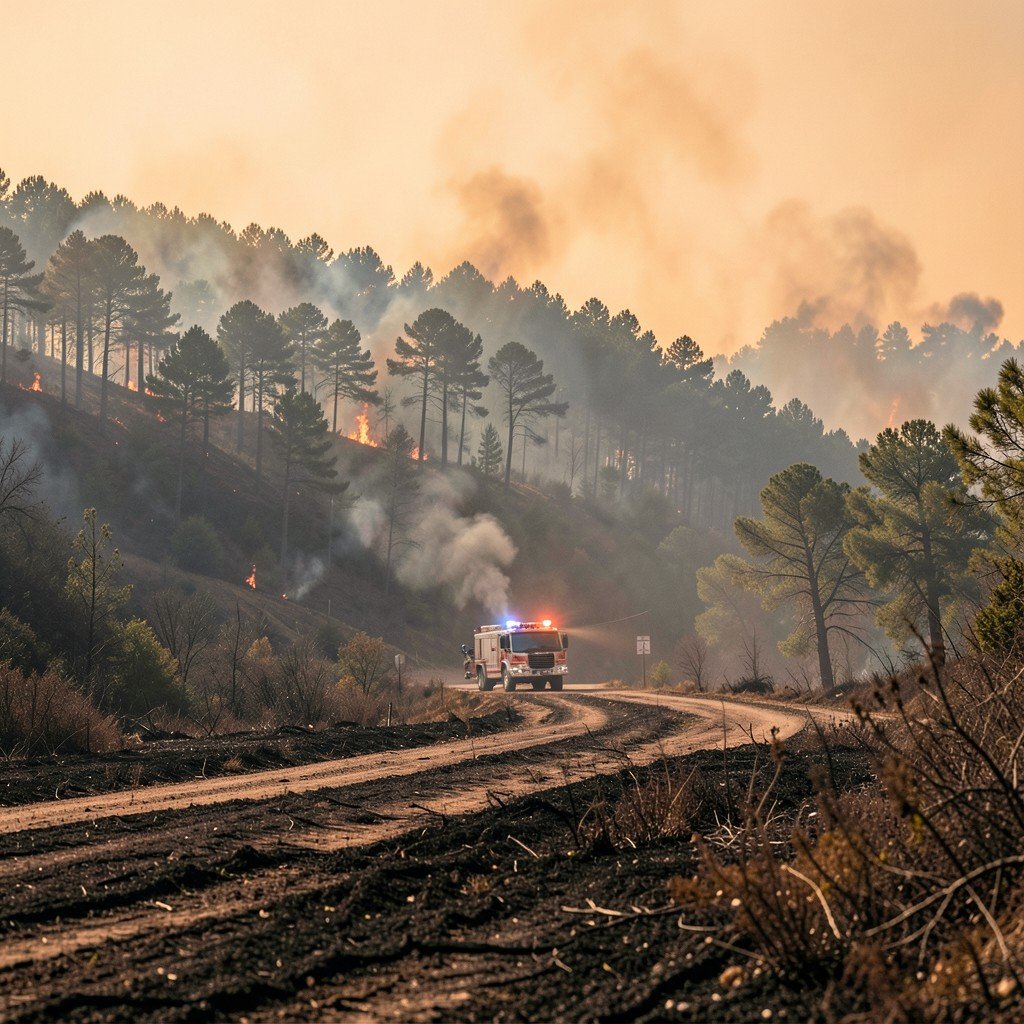
AI-generated representative image: A wildfire burns across a hillside in southern Europe as a firefighting vehicle responds, illustrating the intensifying fire
Editorial Team
Editorial Team
Scientific Reports study links intensifying fire weather across southern Europe directly to global warming as France, Spain, Greece, and Turkiye battle record blazes.

The number of summer days with conditions likely to produce wildfires across southern Europe has more than doubled since 1981, according to a study published Thursday in the Scientific Reports journal, with researchers attributing the "major intensification" of fire-prone weather directly to climate change.

The findings come as European nations endure an above-average wildfire season that has already surpassed 2025, a record-breaking year for destructive blazes. France and Spain have been battling their largest fires since records began, while Greece, Turkiye and the United Kingdom have also confronted major outbreaks in recent days.

The study provides the strongest scientific evidence yet that global warming is fundamentally reshaping Europe's fire risk profile. Southern Europe is "becoming more flammable," the researchers concluded, with the steep rise in fire weather frequency leaving communities, ecosystems and emergency services facing an escalating threat each summer.

Fires Across the Continent

Cooling weather and rain helped calm the worst fires in France and Spain on Thursday. French authorities told 84,000 evacuees in the southwest that it was safe to return home as the country's largest wildfire since 1949 pulled back. Spain ended its state of national emergency after fires threatening areas near Madrid, the largest the country has experienced since records began in 1961, began coming under control.

As high temperatures shifted eastwards, however, new fronts opened. In Greece, two firefighters died on the island of Crete on Wednesday and another died in a separate fire in the Peloponnese region, with blazes continuing into Thursday amid gale-force winds. Greek Prime Minister Kyriakos Mitsotakis warned: "We have difficult days ahead of us."

Firefighters in Turkiye have been battling at least 115 fires across the country, though 110 were under control by Thursday, according to the agriculture minister. In eastern England, an enormous wildfire at Dunwich Heath, a significant biodiversity site, forced evacuations and road closures in what is one of the largest fires the region has seen.
A Continent Under Pressure

Europe has experienced a steady escalation in wildfire severity over recent years. The 2025 season set a record for destructive blazes, a benchmark that 2026 has already surpassed well before the traditional peak of the fire season. France's current wildfire is the largest since 1949, while Spain's blaze near Madrid is the biggest since national records began in 1961, underscoring the unprecedented nature of the current crisis.

The Scientific Reports study provides the climate context behind these events. Researchers found that fire weather, characterised by searing temperatures, low humidity, dryness and strong winds, has increased so sharply across southern Europe that the trend "can only be attributed to global warming," according to study co-author Raul Cordero. The effects are especially pronounced in France and Spain, the two countries that have faced the most severe blazes in recent weeks.

What the Study Revealed

Published Thursday in Scientific Reports, the study documented that summer days featuring fire-prone conditions have more than doubled across southern Europe since 1981. The researchers described this as a "major intensification" and concluded that the steep increase cannot be explained by natural variability alone, pointing instead to human-driven climate change as the primary driver.

The study's findings align with the real-world conditions observed across the continent this summer, where multiple countries have simultaneously confronted large-scale fires stretching emergency response capabilities. The combination of extreme heat, persistent dryness and strong winds has created conditions that allow fires to spread rapidly once ignited.

Current Situation and Outlook

As of Thursday, the immediate crisis has eased in France and Spain, where evacuees are returning home and emergency declarations are being lifted. However, the threat has migrated eastward, with active firefighting operations continuing in Greece, Turkiye and the United Kingdom. Greek authorities remain on high alert, with the prime minister cautioning that challenging days lie ahead. Further updates from affected countries are expected as conditions evolve.

MORE LIKE THIS

Comments (0)

Leave a comment

A verified Gmail account is required to post comments.

No comments yet. Be the first to share your thoughts!