Japan Centenarians Top 100,000 as Ageing Crisis Deepens
news

Japan Centenarians Top 100,000 as Ageing Crisis Deepens

By Editorial TeamSep 19, 2026 · 4:50 PM4 min read
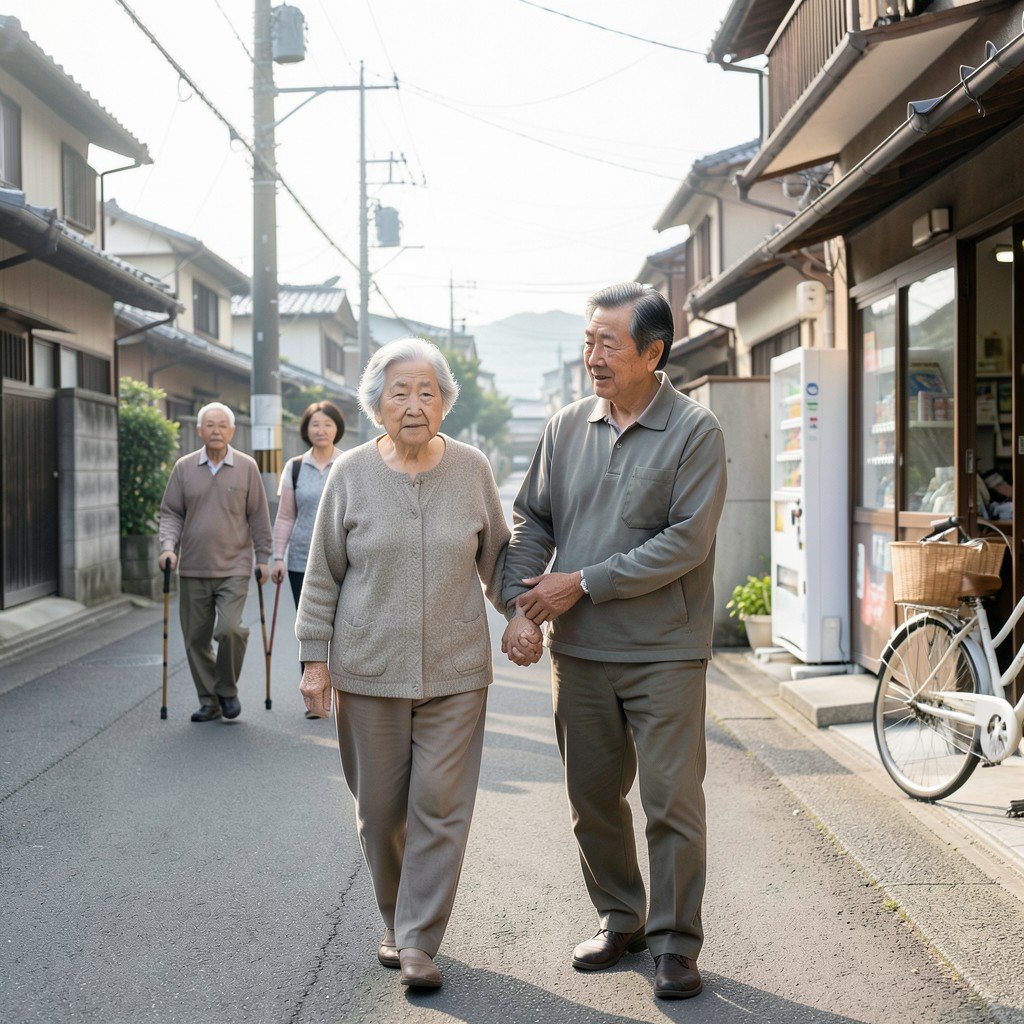
AI-generated representative image: An elderly woman walks with family support along a residential Japanese street, illustrating Japan's rapidly ageing society.
Editorial Team
Editorial Team
Record longevity meets a record low fertility rate and shrinking workforce, reshaping Japan's demographics.

Japan is now home to more than 100,000 people aged 100 or older, a new longevity record that underscores an accelerating demographic crisis in one of the world's oldest societies.

The number of centenarians reached 107,677 this year, according to Japan's Ministry of Health, Labour and Welfare, an increase of 7,914 from 2025 and the 56th consecutive annual rise. Women account for almost 88 percent of the total.

The milestone highlights a profound imbalance: Japan's elderly population keeps growing while births remain at an all-time low, leaving a shrinking workforce to shoulder mounting pension, healthcare and social care costs.

The trend carries major implications for public finances, labour markets and social policy, and it mirrors an ageing transition now advancing across much of the developed world.

Longevity Milestone and Government Response

Health Minister Kenichiro Ueno said he was "very pleased that many people are living long, healthy and active lives", crediting advances in medical technology as well as healthy lifestyles and diets.

Prime Minister Sanae Takaichi has identified population decline and the falling birthrate as major national challenges, while Japanese officials have repeatedly warned that the trend threatens the country's economic and social foundations.

Japan's total fertility rate, the average number of children a woman is expected to have in her lifetime, fell to a record low of 1.14 in 2025. A rate of about 2.1 is generally considered necessary to maintain a stable population without relying on immigration.

How Rapidly Japan Is Ageing

Nearly three in every 10 Japanese residents are now aged 65 or older, a proportion projected to approach 40 percent by 2070. More than 800,000 people were aged 95 or above last year, while only 700,000 babies were born, according to government figures.

Japan's population peaked at about 128 million in 2008, and the National Institute of Population and Social Security Research projects it will fall to 87 million by 2070, a decline of roughly 30 percent. Preliminary census figures show the population was lower in 45 of Japan's 47 prefectures in 2025 than five years earlier, with only Tokyo and Okinawa recording increases.

Researchers attribute Japan's longevity to a combination of factors, including a traditional diet rich in fish, vegetables and rice with comparatively low saturated fat, lower obesity rates than many Western countries, active daily routines involving walking, cycling and public transport, and a universal health insurance system providing broad access to treatment at relatively low cost.

Economic Pressures and Global Comparison

A shrinking working-age population means fewer people paying income taxes and social-security contributions while spending on pensions, healthcare and elderly care rises. Labour shortages are affecting industries from construction and agriculture to transport, healthcare and social care, with rural areas hit hardest as younger residents move to cities.

Japan has introduced child allowances, subsidised childcare, parental leave programmes and other incentives to encourage larger families, but none has reversed the long-term decline. Social scientists note that fewer people are marrying or are marrying later, while many younger adults face insecure employment, stagnant wages and demanding working hours. Women's increased workforce participation has also not been matched by an equal sharing of childcare and household duties.

Immigration could help offset shortages, and Japan's foreign population has risen in recent years, but foreign nationals still account for only about 3 percent of the population and proposals to accept substantially more migrants remain politically contentious. Globally, life expectancy reached 73.3 years in 2024, up 8.4 years since 1995, according to the World Health Organization, with the number of people aged 60 or older projected to rise from 1.1 billion in 2023 to 1.4 billion by 2030. Japan's median age of 49 in 2023 led the world, followed by Italy at 47.5, Portugal at 46.2, Greece at 45.7 and Germany at 45.1.


What Lies Ahead

Japan's centenarian population continues to climb each year, while the fertility rate remains at a historic low, suggesting the demographic imbalance will deepen in the near term.

Officials have not announced a confirmed reversal of the trend, and the effectiveness of existing family-support measures remains under observation. Further policy responses are expected as the government confronts the challenge of sustaining public services with a smaller working-age population.

MORE LIKE THIS

Comments (0)

Leave a comment

A verified Gmail account is required to post comments.

No comments yet. Be the first to share your thoughts!