


Ebola Outbreak in DR Congo Surges Past 3,200 Cases Amid Bundibugyo Strain Crisis
news

Ebola Outbreak in DR Congo Surges Past 3,200 Cases Amid Bundibugyo Strain Crisis

By Editorial TeamJul 27, 2026 · 5:37 AM3 min read
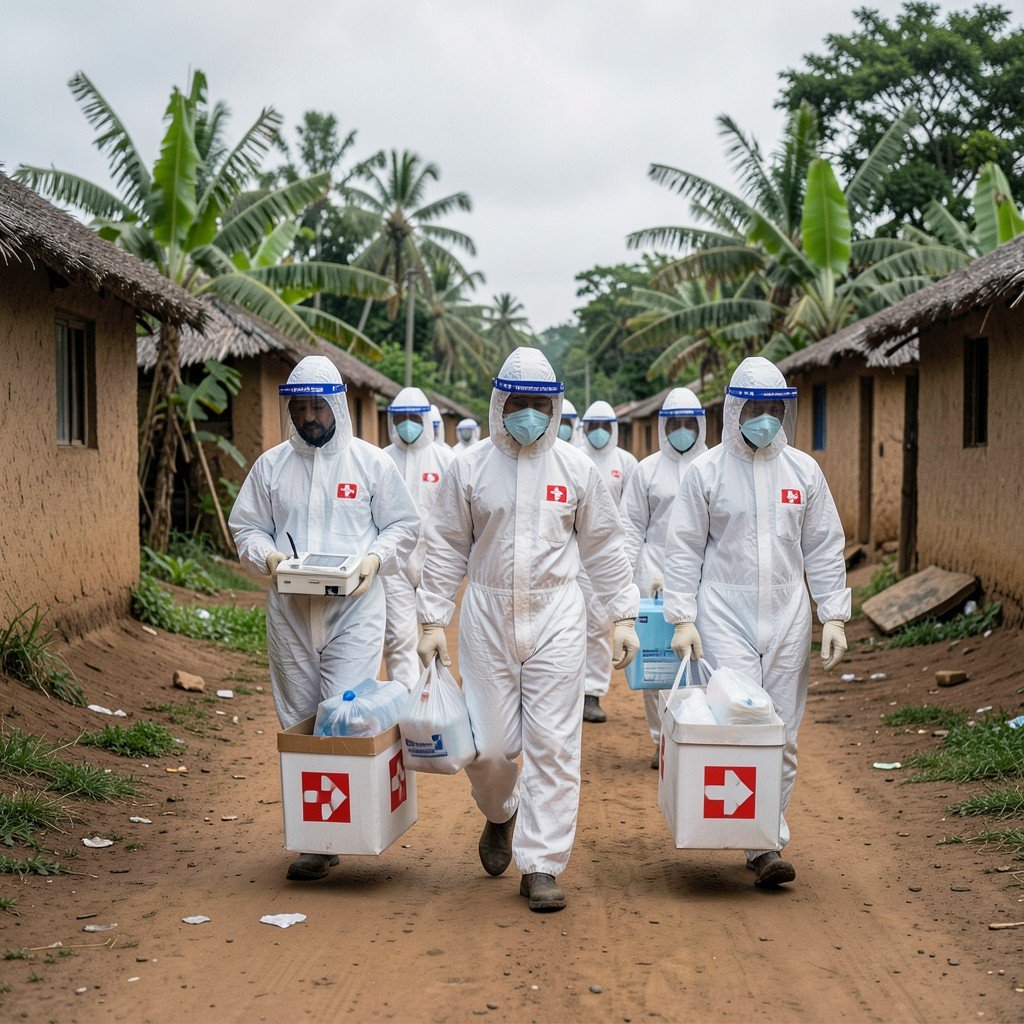
AI-generated representative image: Healthcare workers in protective gear transport medical supplies in Ituri province, DR Congo, where Ebola cases have surpasse
Editorial Team
Editorial Team
Government data confirms 1,405 deaths as the vaccine-resistant Bundibugyo variant spreads across five provinces, with 1,000 new infections reported in just 10 days.

The number of Ebola infections in the Democratic Republic of the Congo has climbed to 3,200, with at least 1,405 confirmed deaths, according to government data released on Sunday. The figures reflect a sharp escalation in the country's 17th Ebola outbreak, with roughly 1,000 new cases recorded in just 10 days.

The outbreak, declared on May 15, is driven by the Bundibugyo strain of the Ebola virus, for which no approved vaccine or treatment currently exists. The rapid spread has raised alarm among global health authorities, particularly as the virus has recently expanded into two additional provinces beyond the initial outbreak zone.

Outbreak Spread and Geographic Reach

The World Health Organization reports that nearly 90 percent of all cases are concentrated in the northeastern province of Ituri, which shares borders with South Sudan and Uganda. The virus has now been confirmed in five provinces, including two that were previously unaffected and where transmission was only recently detected.

Authorities attribute the rising case count partly to improved detection and testing capabilities, which have allowed health workers to identify infections that might previously have gone unrecorded. However, officials caution that the outbreak could persist for several more months.


Historical Context of Ebola in Africa

This marks the DRC's 17th Ebola outbreak. The Ebola virus, which spreads through direct contact with bodily fluids and causes hemorrhagic fever, has claimed more than 15,000 lives across the African continent over the past five decades. The DRC has historically been one of the countries most affected by recurrent Ebola epidemics.

Unlike previous outbreaks that involved the more common Zaire strain, the current crisis is caused by the Bundibugyo strain, which presents a distinct challenge: there is no approved vaccine or treatment available for this variant. This has complicated containment efforts and placed additional pressure on already strained healthcare infrastructure.

Logistical Challenges and Healthcare Worker Unrest

Hedley Tah of the UN Humanitarian Air Service (UNHAS), which transports medical personnel and response teams to crisis front lines, described access as the primary obstacle. "In many cases the humanitarian community wants to help, but the real challenge is getting there," Tah said. UNHAS is also responsible for moving laboratory samples to maintain traceability of infections.

Response efforts have been further disrupted by strikes among healthcare workers demanding unpaid wages, with walkouts reported at several hospitals. The combination of a vaccine-less strain, difficult terrain, and labor unrest has significantly hampered containment operations.

Vaccine Development Efforts Underway

Scientists are accelerating efforts to develop vaccines and treatments targeting the Bundibugyo strain. Oxford University announced on Friday that the first group of volunteers has received an experimental vaccine specifically designed for this strain. Several other candidate vaccines are being fast-tracked for clinical trials, while two potential treatments are also under development. No approved vaccine or therapeutic is yet available for deployment in the field.

MORE LIKE THIS

Comments (0)

Leave a comment

A verified Gmail account is required to post comments.

No comments yet. Be the first to share your thoughts!