


Gaza Brothers Missing for Over a Year After Seeking Aid Near Netzarim
news

Gaza Brothers Missing for Over a Year After Seeking Aid Near Netzarim

By Editorial TeamAug 3, 2026 · 12:41 PM4 min read
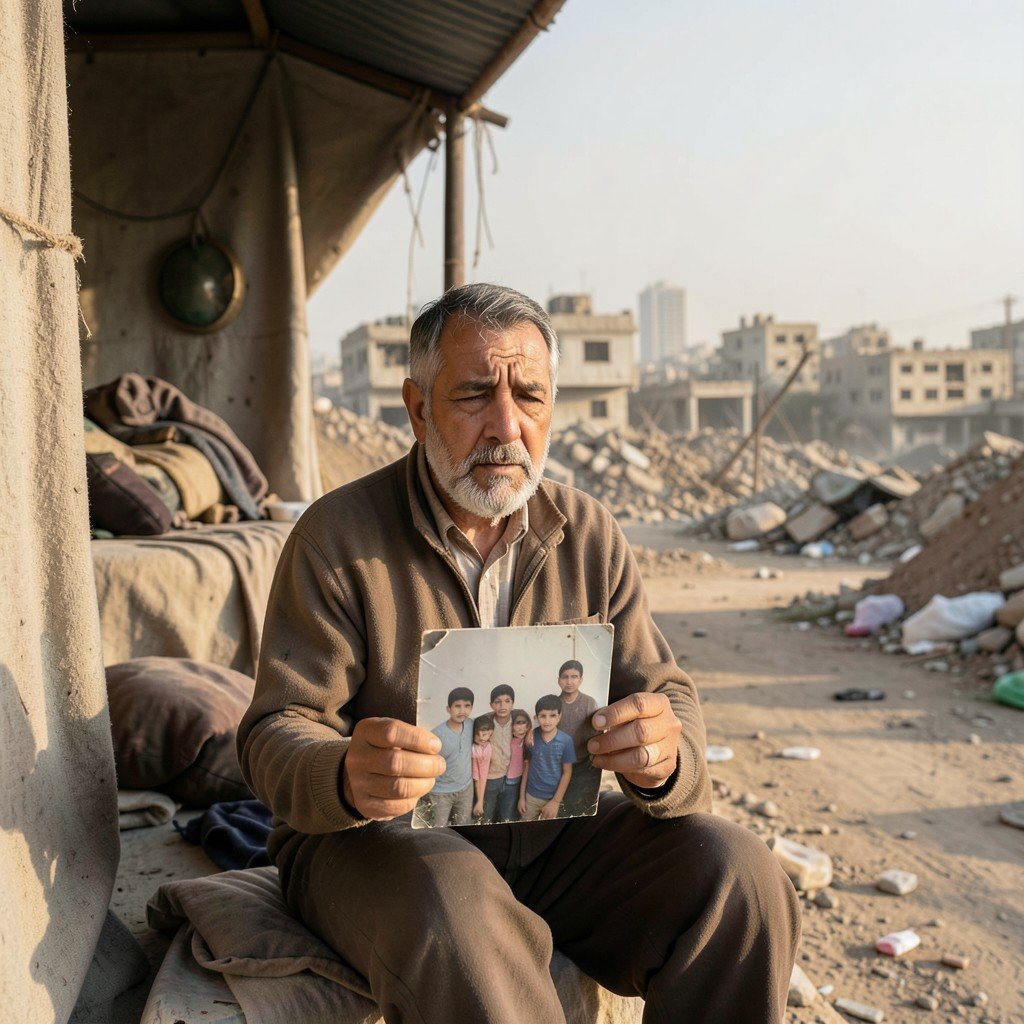
AI-generated representative image. Rafaat Abdel Aal holds a photo of his missing sons, Othman and Sami, who vanished while seeking food aid near Netzarim over a
Editorial Team
Editorial Team
The Abdel Aal family demands answers as conflicting reports surround Othman and Sami's disappearance

More than a year after two teenage brothers vanished while heading to an aid distribution point in central Gaza, their family remains trapped between grief and hope, pleading for any confirmed information about their fate.

Othman Abdel Aal, now 17, and his brother Sami, 13, left their displaced family's shelter in Gaza City on the morning of June 29, 2025. They said they were going to collect food near the Netzarim Corridor and promised their six-year-old sister they would return with sweets. They never came back.

The Abdel Aal family's ordeal reflects a far wider humanitarian crisis. Gaza's Government Media Office estimates approximately 11,200 people remain missing across the territory, including those believed trapped under rubble and others whose whereabouts are unknown. Thousands of families are navigating the same agonising uncertainty, caught between unverified reports and an absence of official information.

A Timeline of False Leads and Unconfirmed Reports

The family's search began the day after the brothers disappeared, when their father Rafaat, 41, scoured hospitals, displacement shelters and relatives' homes across Gaza City. He found no trace of his sons.

More than a month later, the first potential lead emerged: a Shujayea resident reported seeing four bodies near the family's old home, two of which remained unidentified. Rafaat said the descriptions matched his sons but could not confirm it. Two days later, a relative sent a photograph of an unidentified body at al-Ahli Arab Hospital. Rafaat was convinced it was Othman with "90 percent certainty" but discovered upon arriving that it was not his son.

In October 2025, after a ceasefire deal between Israel and Hamas, Rafaat reached the family's former neighbourhood in Shujayea. He found only rubble, a missile fragment and a small bone remnant. The area later fell behind the Yellow Line of Israeli control, cutting off further access. Then in May, the family received a phone call claiming a lawyer from inside Israel had said the boys were alive and detained in Ofer and Naqab prisons. The claim was never officially confirmed, and subsequent attempts to reach the lawyer failed.

Hunger and Danger at Aid Distribution Points

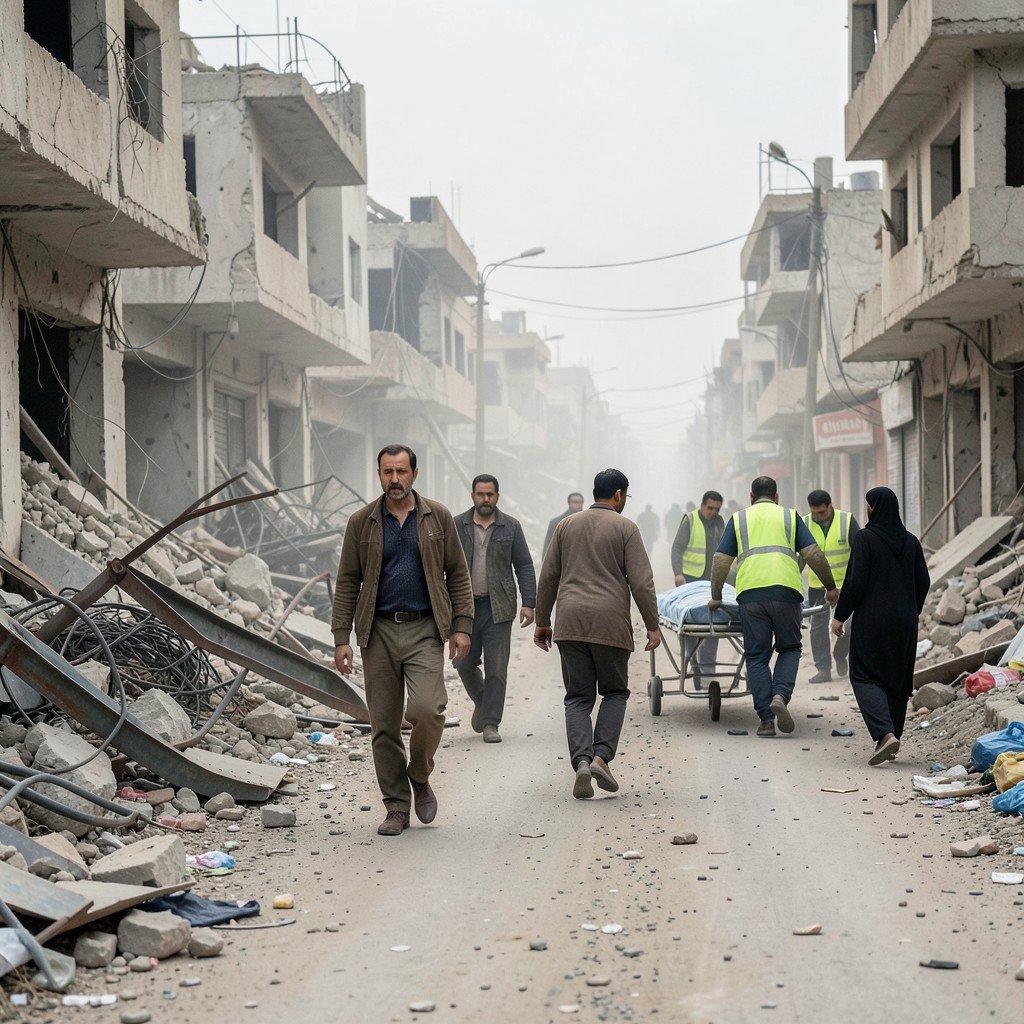
The Abdel Aal family was displaced from their home in the Shujayea neighbourhood during Israel's military campaign in Gaza, which has killed more than 73,340 people according to health officials. They found shelter at a relative's house in Gaza City in April 2025, as hunger, soaring prices and severe shortages drove many to take desperate risks in search of food.

On the day his sons disappeared, Rafaat was also away, having travelled to US-backed aid distribution sites near the Zikim area in northern Gaza. The United Nations reported on August 1, 2025 that at least 1,373 Palestinians had been killed while seeking food since late May 2025, including 859 near aid distribution sites and 514 along food convoy routes.

Institutional Challenges in Tracing the Missing

Pat Griffiths, spokesperson for the International Committee of the Red Cross (ICRC) in Jerusalem, said the organisation relies on tracing requests filed by families, but the process is "often slow, complex and frustrating." A critical obstacle is that the ICRC has not had access to Israeli places of detention since the war began in October 2023, despite ongoing dialogue with Israeli authorities. "This means that we are not able to confirm to families those who are detained, like we used to," Griffiths said.

Nada Abu Aita, director of the Palestinian Centre for Missing and Forcibly Disappeared Persons, said the centre has documented numerous cases of families contacted by individuals falsely claiming to be lawyers or organisational representatives. Some institutions these individuals cited did not exist, and some names appeared fabricated. "In many cases, families choose to believe these reports, which we classify at the centre as misleading, because they want to hold on to any hope that could bring their son back to them," Abu Aita said.

An Open Search with No Resolution

The ICRC currently holds thousands of open tracing requests, though the number fluctuates daily as new cases are filed and others are closed. Griffiths said confirmed information is shared with families whenever it becomes available, whether it concerns detention, inability to communicate, or death. For the Abdel Aal family, however, no such confirmation has arrived. "I don't want to keep looking forever. I want to know," Rafaat said. His wife Ashjan, 36, added: "If they are dead, tell us. If they are alive, tell us."

MORE LIKE THIS

Comments (0)

Leave a comment

A verified Gmail account is required to post comments.

No comments yet. Be the first to share your thoughts!