

Israel Rejects Trump Gaza Plan, Demands Full Hamas Disarmament
news

Israel Rejects Trump Gaza Plan, Demands Full Hamas Disarmament

By Editorial TeamAug 9, 2026 · 9:45 PM4 min read
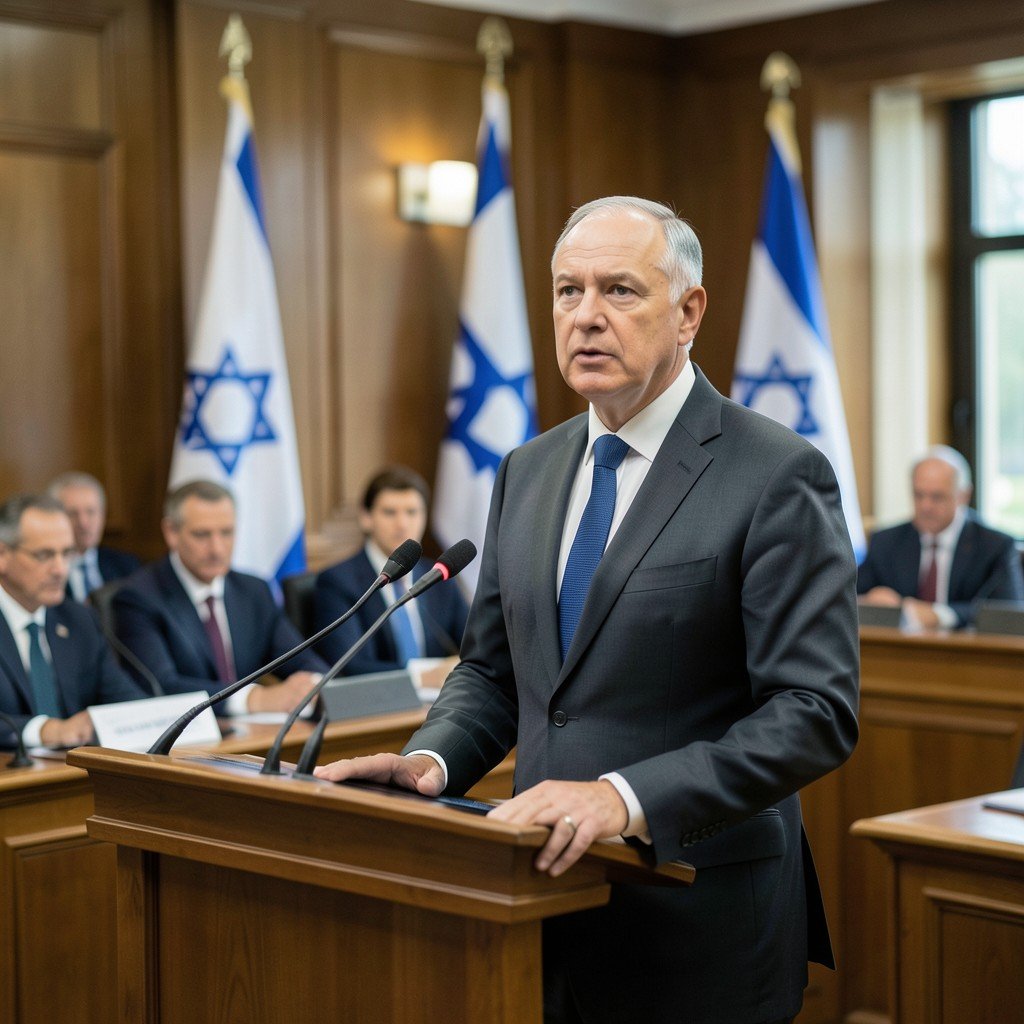
AI-generated representative image. Israeli Prime Minister Benjamin Netanyahu addresses a cabinet meeting in Jerusalem, where he formally rejected the US-propose
Editorial Team
Editorial Team
Netanyahu's refusal of the US-led 15-point roadmap deepens Gaza ceasefire uncertainty as Israeli elections loom and Palestinians brace for prolonged hostilities.

Israeli Prime Minister Benjamin Netanyahu has formally rejected United States President Donald Trump's 15-point roadmap for Gaza, declaring that Israeli forces will not withdraw from the war-torn enclave until Hamas is "genuinely disarmed."

The rejection, announced during a cabinet meeting on Saturday, threatens to unravel months of US-led mediation efforts and casts serious doubt over the phased disarmament and reconstruction framework proposed by the Board of Peace on July 30.

The standoff carries immediate consequences for more than two million Palestinians in Gaza, where over 73,300 people have been killed since October 2023. With Netanyahu facing a tough national election on October 27 and trailing in successive opinion polls, analysts view the rejection as a politically calculated move to shore up his right-wing base rather than a purely security-driven decision.

What the Rejection Means

Netanyahu's cabinet-level rejection directly contradicts the Board of Peace's position, which stated earlier this week that Israeli withdrawal would only occur after Hamas disarmament is complete. The Israeli leader has now gone further, insisting that no pull-back can begin until all weapons are surrendered.

"We are talking about real disarmament, not fictitious disarmament," Netanyahu said, adding that Israel was engaging with Washington over its concerns. "They have ideas; some of them are acceptable to us, and some are not, and we know how to stand our ground on these matters."

The rejection places the Board of Peace and international mediators in a difficult position, as Hamas has consistently linked its compliance to an end of what it describes as Israeli genocidal actions. A Hamas negotiating delegation member confirmed last month that the group's implementation depends on Israel fulfilling its commitments.

Origins of the Peace Framework

Trump established the Board of Peace in October 2025, appointing himself as its lifetime chair. The body operates under United Nations Security Council Resolution 2803, which designates it as the authority responsible for overseeing the Gaza peace plan.

On July 30, the Board proposed a 15-point roadmap that mandated Hamas disarmament in exchange for a full Israeli military withdrawal and the transition of governance to an independent Palestinian National Committee, supported by an international security force. Trump announced that Hamas and other armed groups had accepted the phased framework, under which weapons would be surrendered to a new Palestinian governing body while Israeli troops pulled out in tandem.

The war began with the October 7, 2023 attack on southern Israel and has since expanded to include Israeli military operations in Lebanon and Iran. Despite a US-mediated ceasefire agreed in October 2025, Israeli strikes have continued, killing more than 1,200 additional Palestinians according to the Gaza Health Ministry.

Expert and Palestinian Reactions

In Gaza City, most residents had anticipated Israel's rejection, according to Voice of Urdu correspondent reports. The plan was meant to provide structure around key elements: Israeli withdrawal from the occupied "Yellow Line" area, Hamas disarmament, and the entry of international stabilisation forces. Its rejection leaves no clear end to hostilities.

Political analyst and former Palestinian negotiations adviser Xavier Abu Eid said the framework was accepted late last year because it was argued as the only path to ending the war, but "it was very clear from the very beginning that the 20-point plan of President Trump and the 15-point disarmament and implementation plan that followed were more about meeting Israeli interests than the Palestinian right to self-determination."

Former Israeli diplomat Alon Pinkas argued the rejection "should be viewed entirely in the context of the upcoming Israeli election on October 27," suggesting Netanyahu calculated he could defy Trump without consequence. Israeli analyst Dan Perry countered that the move is "misaligned with what the people in Israel would generally want," noting that even a declarative Hamas agreement to disarm should be welcomed.

What Lies Ahead

The Board of Peace now faces the challenge of reconciling irreconcilable positions: Israel demands disarmament before any withdrawal, while Hamas conditions its compliance on an end to Israeli military operations. With Netanyahu's election approaching, analysts suggest he has little political incentive to compromise.

For Palestinians in Gaza, the rejection translates into prolonged uncertainty with no clear timeline for reconstruction, governance transition, or an end to hostilities. Further negotiations between Washington and Jerusalem are expected, though no immediate breakthrough appears likely.

MORE LIKE THIS

Comments (0)

Leave a comment

A verified Gmail account is required to post comments.

No comments yet. Be the first to share your thoughts!