


Pentagon Demands Faster Weapons Production as Missile Interceptor Stockpiles Plummet
news

Pentagon Demands Faster Weapons Production as Missile Interceptor Stockpiles Plummet

By Editorial TeamAug 9, 2026 · 9:45 PM4 min read
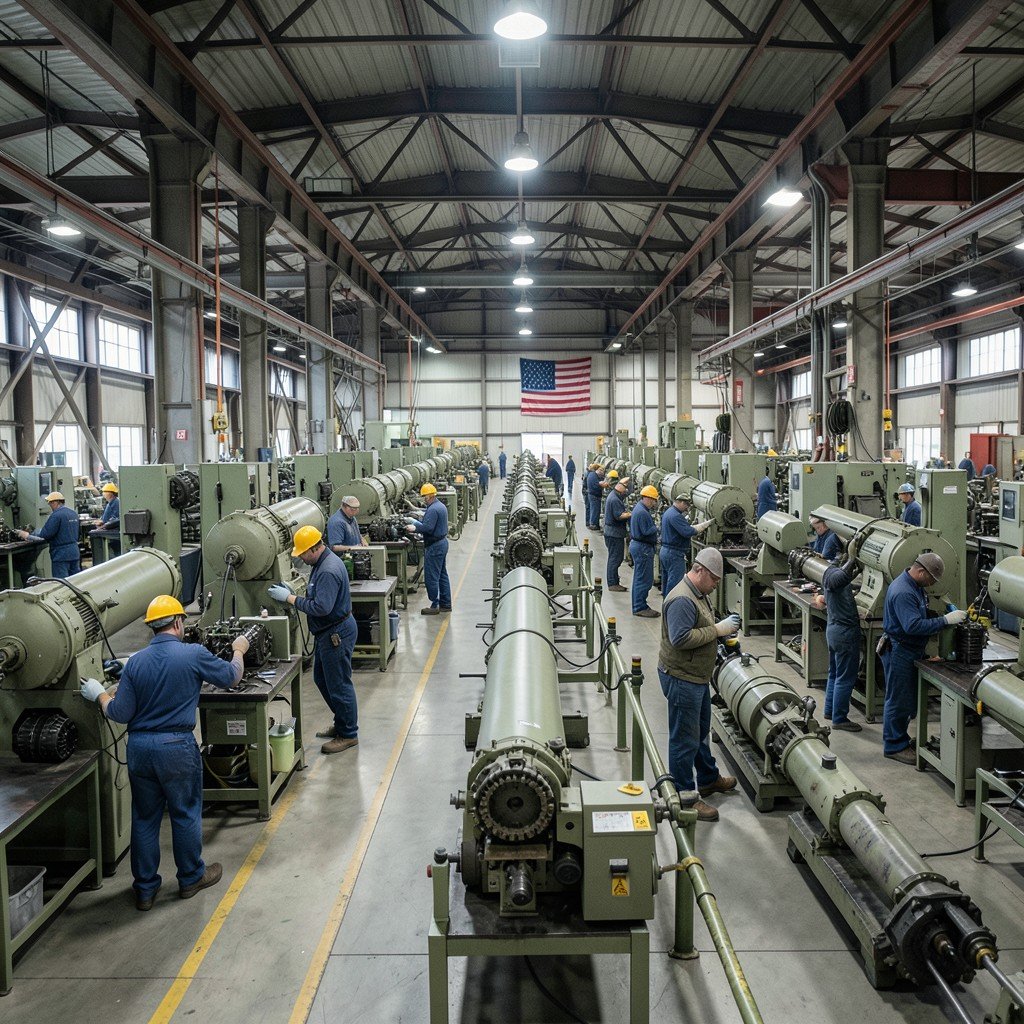
AI-generated representative image. A US defense manufacturing facility producing missile interceptor systems amid Pentagon demands for accelerated weapons produ
Editorial Team
Editorial Team
Deputy Defense Secretary gives contractors 21 days to submit accelerated Patriot and THAAD delivery plans amid Iran-driven depletion crisis

The Pentagon has ordered US defence contractors to dramatically accelerate weapons production, issuing a 21-day deadline for industry leaders to submit plans for faster delivery schedules amid growing alarm over depleted missile interceptor stockpiles following five months of conflict with Iran.

Deputy Defense Secretary Steve Feinberg sent a memo to defence industry leaders on Wednesday demanding they "drive significantly faster, more aggressive delivery schedules and/or increased production for critical capabilities," according to a document obtained by The Washington Post. Pentagon spokesman Sean Parnell confirmed on Saturday that the directive is genuine and will shape the fiscal year 2028 budget request to Congress.

The urgency reflects a precarious depletion of advanced air defence systems. The Center for Strategic and International Studies (CSIS) estimates Patriot interceptor reserves have fallen from 2,330 before the war to between 759 and 827, a decline of at least 65 percent. THAAD interceptors have dropped from 452 to between 234 and 278, a reduction of at least 38 percent.

Experts warn that continued shortages could force US and allied forces in the Middle East to conserve interceptors by launching fewer defensive missiles, raising the risk of Iranian drones or missiles penetrating air defences.

Pentagon Directive and Industry Response

Feinberg's memo sets a firm 21-day deadline for defence contractors to submit plans for significantly accelerated production. "Years-long development cycles are not acceptable," he wrote. "We must dramatically accelerate our program schedules and expand our production capacity now."

Parnell stated that the department has been focused over the past week on speeding up munitions acquisitions to provide "the weapons our warfighters need at the pace the threat demands." He maintained the effort is part of a broader modernisation push that predates the Iran conflict. Earlier this month, the Department of Defense signed a new agreement with Lockheed Martin and Northrop Grumman to increase production capacity for missile defence system components.


Political and Budgetary Stalemate

The Pentagon's production demands come as a defence spending bill remains stalled in Congress, where lawmakers are resisting the White House request to increase Pentagon funding to $1.5 trillion, up from approximately $900 billion last year. Congressional frustration over President Donald Trump's military action against Iran has further complicated budget negotiations.

Trump has pushed back against public reports of munitions shortages, writing on his Truth Social account on Thursday that "the US has massive amounts of 'munitions,' especially of certain types." He added that defence contractors are "building the largest number of plants and factories in our country's history." Experts caution that even with an influx of funding, restoring Patriot and THAAD interceptor levels to pre-war figures will likely take at least three years.

Stockpile Depletion by the Numbers

CSIS analysis tracks a steep decline in both primary interceptor systems. Patriot interceptors numbered 2,330 before the conflict, dropped to 1,030 when the April ceasefire took effect, and have since fallen further to an estimated 759 to 827. THAAD interceptors fell from 452 pre-war to between 232 and 262 at the April ceasefire, with modest replenishment bringing the current range to between 234 and 278.

Retired US Marine Corps colonel Mark Cancian, a co-author of the CSIS analysis, offered a stark assessment. "We don't have that many [interceptors] left, and there are no good substitutes," he said. "If we run out of Patriots, then the missiles get through." The think tank warned that shrinking inventories may compel US and allied forces to take greater risks in conserving air defences.

What Comes Next

Defence contractors now have until late August to submit their accelerated production plans. Those submissions will directly inform the Pentagon's fiscal year 2028 budget proposal to Congress, where the path to approval remains uncertain given the current legislative impasse. Parnell described the effort as "entirely consistent with our ongoing push to rebuild the defense industrial base," signalling that the production acceleration is viewed as a long-term strategic necessity regardless of the immediate conflict with Iran.

MORE LIKE THIS

Comments (0)

Leave a comment

A verified Gmail account is required to post comments.

No comments yet. Be the first to share your thoughts!