

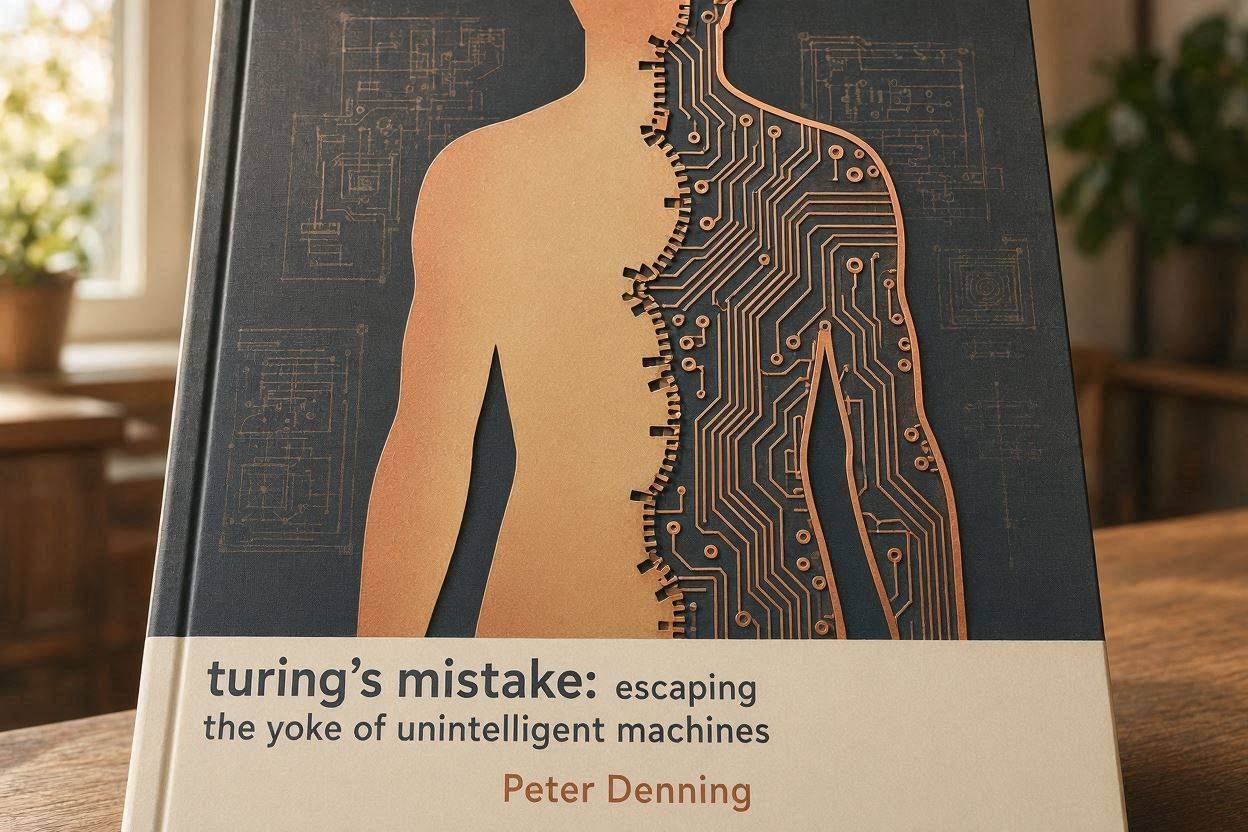

Denning’s critique centers on what he calls the “tacit knowledge” problem—human understanding that cannot easily be put into words or translated into representations computers can process. He argues that machine learning cannot capture five major categories of tacit knowledge: common sense; everyday interactions with people and the environment; emotions and perception; practical performance skills; and the social and historical knowledge embedded in culture.
As evidence of the difficulty of encoding common sense, Denning points to long-running attempts to assemble vast knowledge bases. He cites Douglas Lenat’s Cyc project, launched in the 1980s to build an extensive collection of common-sense facts; after four decades, Cyc contained roughly 25 million entries. Denning argues the outcome still fell short: “Yet even this treasury could not add up to a background of common sense sufficient to make expert systems smart enough to be experts,” adding that “Cyc validated that much of the knowledge that makes people experts cannot be articulated as propositions.”
Denning says practical skills are even harder to translate into machine form because they depend on embodied experience. “Our performance skills in thousands of domains cannot be communicated to machines,” he writes, distinguishing between “know what” and “know how”: “Whereas descriptions of skillful outcomes (‘know what’) can often be represented as bits and stored in a machine, we do not know how to encode the embodied knowledge for skillful performance (‘know how’).” He also places intuition, gut feelings, imagination and spontaneous creativity among forms of tacit knowledge that remain beyond machine reach.