

Iranian Kurdish Parties in Iraq Caught Between Tehran Strikes and US Ambitions
news

Iranian Kurdish Parties in Iraq Caught Between Tehran Strikes and US Ambitions

By Editorial TeamAug 1, 2026 · 1:02 PM4 min read
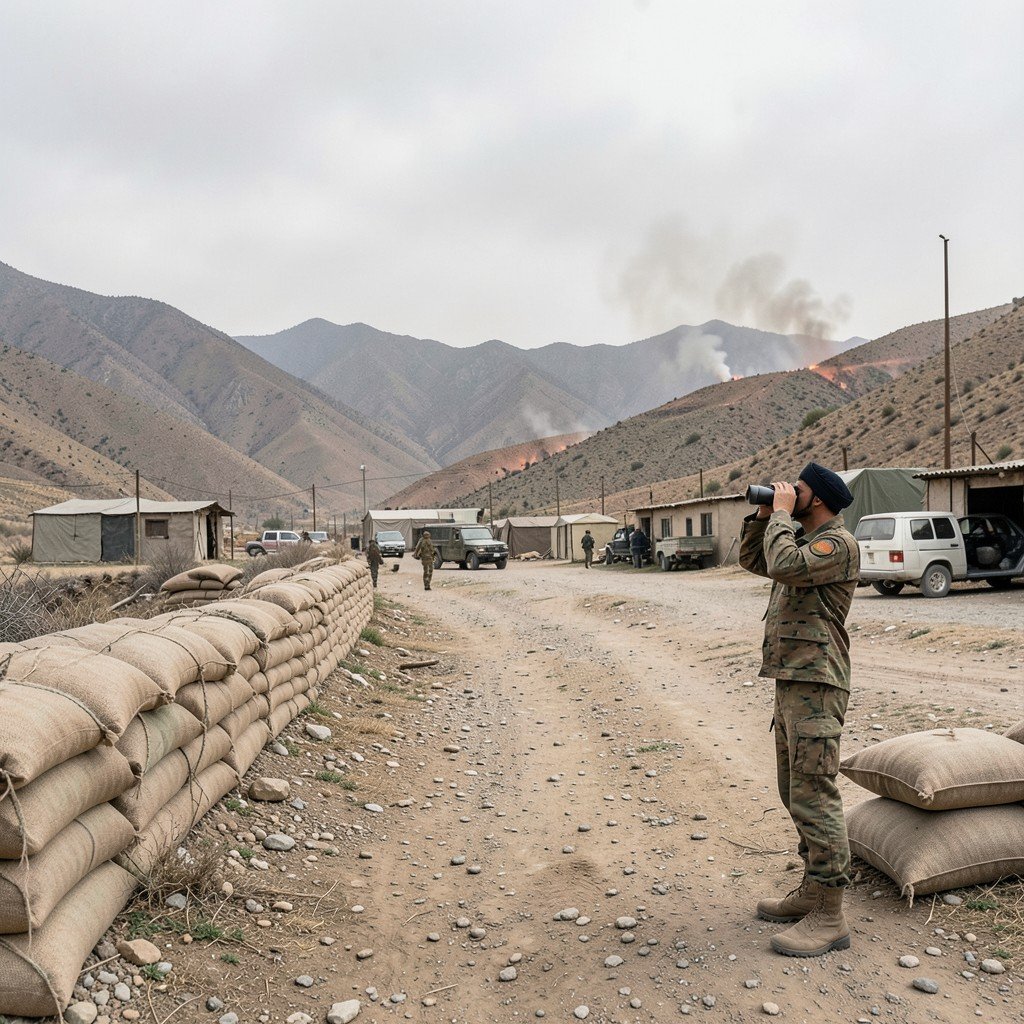
AI-generated representative image: Kurdish opposition fighters keep watch at a mountain outpost in northern Iraq's Kurdistan Region amid escalating Iranian cros
Editorial Team
Editorial Team
Kurdish opposition groups face intensifying Iranian attacks while weighing risks of aligning with the US-Israel military campaign

Iranian Kurdish opposition parties based in northern Iraq have come under sustained drone and missile attacks from Tehran since the US-Israel military strikes on Iran began on February 28, forcing these groups to navigate a precarious balance between defending their positions and avoiding a wider escalation that could destabilize the semi-autonomous Kurdistan Region.

The Kurdish groups, which command thousands of fighters and maintain organizational networks both in Iraq and inside Kurdish areas of Iran, have been thrust onto the front lines of the conflict. Their decisions in the coming weeks could significantly influence the trajectory of the war, the stability of Iraq's Kurdistan Region, and the prospects for regime change in Tehran.

Escalating Attacks and Casualties

Since the outbreak of hostilities, Iranian Kurdish parties have reported extensive targeting of their bases and positions. Rebaz Sharifi, a leader of the Kurdistan Freedom Party of Iran, estimated his party's facilities have been attacked more than 80 times. Kako Alyar of the Komala Party of Iranian Kurdistan confirmed that 13 fighters connected to his party have been killed in Iranian strikes.

Iranian state media have acknowledged operations against what they describe as "anti-Iran separatist forces" in difficult-to-reach areas near the Iran-Iraq border. The attacks have targeted both military and political assets belonging to the Kurdish groups, which on February 22, 2026 formed the Coalition of Political Forces of Iranian Kurdistan, uniting five parties in response to Tehran's crackdown on protests.
Historical Roots of the Kurdish Opposition

Iranian Kurdish groups have operated from northern Iraq for decades. Their presence expanded significantly after Iraq's defeat in the 1990-1991 Gulf War, which led to the establishment of a no-fly zone and eventual self-rule by the Kurdistan Regional Government. The US-led invasion of Iraq in 2003 further insulated these groups, allowing them to build military formations and political structures on both sides of the border.

Kurds constitute roughly 10 percent of Iran's population, and both US President Donald Trump and Israeli officials have publicly suggested that arming Kurdish fighters could shift the balance of power inside Iran. However, Kurdish leaders express deep scepticism about Washington's intentions. Sharifi stated plainly: "They don't want to support forces inside Iran with the aim of toppling the regime. The objective is to weaken the Iranian influence in the Middle East."

Leaders Deny Foreign Military Support

Despite widespread speculation on social media, opposition leaders have categorically denied receiving weapons or military assistance from the United States, European countries, or Arab states. Alyar confirmed: "The party has not received any military assistance from the United States, nor from European or Arab countries, despite the demands to get such support." Sharifi similarly rejected claims that his group had obtained foreign backing.

Soran Palani, an expert on Iranian affairs, described the situation as a "highly complex equation." He noted that the Kurdistan Region has provided these parties with space for political and military activity, but this same presence makes the region vulnerable to Iranian retaliation. Palani also pointed to the broader regional imbalance: Iran has built extensive influence across Iraq, Syria, Lebanon, and Yemen, while Arab countries have not offered comparable support to Iranian opposition groups, including those in the Ahwaz region.

Restraint and Uncertainty Ahead

The Iraqi Kurdistan Regional Government has urged Iranian Kurdish parties to refrain from activities that could provoke Iranian retaliation and harm local security. Sharifi acknowledged this pressure, stating: "We could have done more inside Iran, but we place the security and stability of the Kurdistan Region at the top of our priorities." Meanwhile, the Iraqi government has insisted that its territory must not serve as a launchpad for attacks against neighbouring countries.

The central unanswered question remains whether the current conflict will evolve into a broader campaign for regime change in Tehran. For many Kurds, the regime's collapse could present a historic opening, but it also risks creating a dangerous security vacuum. The next phase of the conflict will be decisive for Iranian Kurds, Iraq, the United States, and the wider region.

MORE LIKE THIS

Comments (0)

Leave a comment

A verified Gmail account is required to post comments.

No comments yet. Be the first to share your thoughts!