Fuel quota app plan finalised for bikes and rickshaws
business

Fuel quota app plan finalised for bikes and rickshaws

By Editorial TeamApr 13, 2026 · 11:52 AM4 min read
Editorial Team
Editorial Team

ISLAMABAD: The federal government has finalised a fuel quota app for motorcycles and rickshaws—and is considering whether to include vehicles up to 800cc—to deliver a targeted fuel subsidy for low-income users while using pricing signals to curb consumption, a senior government official told Dawn.

The decision comes as officials warn of critical conditions in fuel supply chains linked to the ongoing Middle East war and shipping disruption in the Strait of Hormuz. The government is also said to be bearing an estimated Rs70 billion cost for keeping petrol and diesel prices unchanged for two weeks despite rising global pressures.

Key developments

  • Testing completed: The system has been tested and finalised by the Oil and Gas Regulatory Authority (Ogra) and the ministries of finance, petroleum and information technology, according to a senior official.
  • Final scope decision pending: The government will decide whether the scheme remains limited to two- and three-wheelers or extends to small cars (potentially up to 800cc).
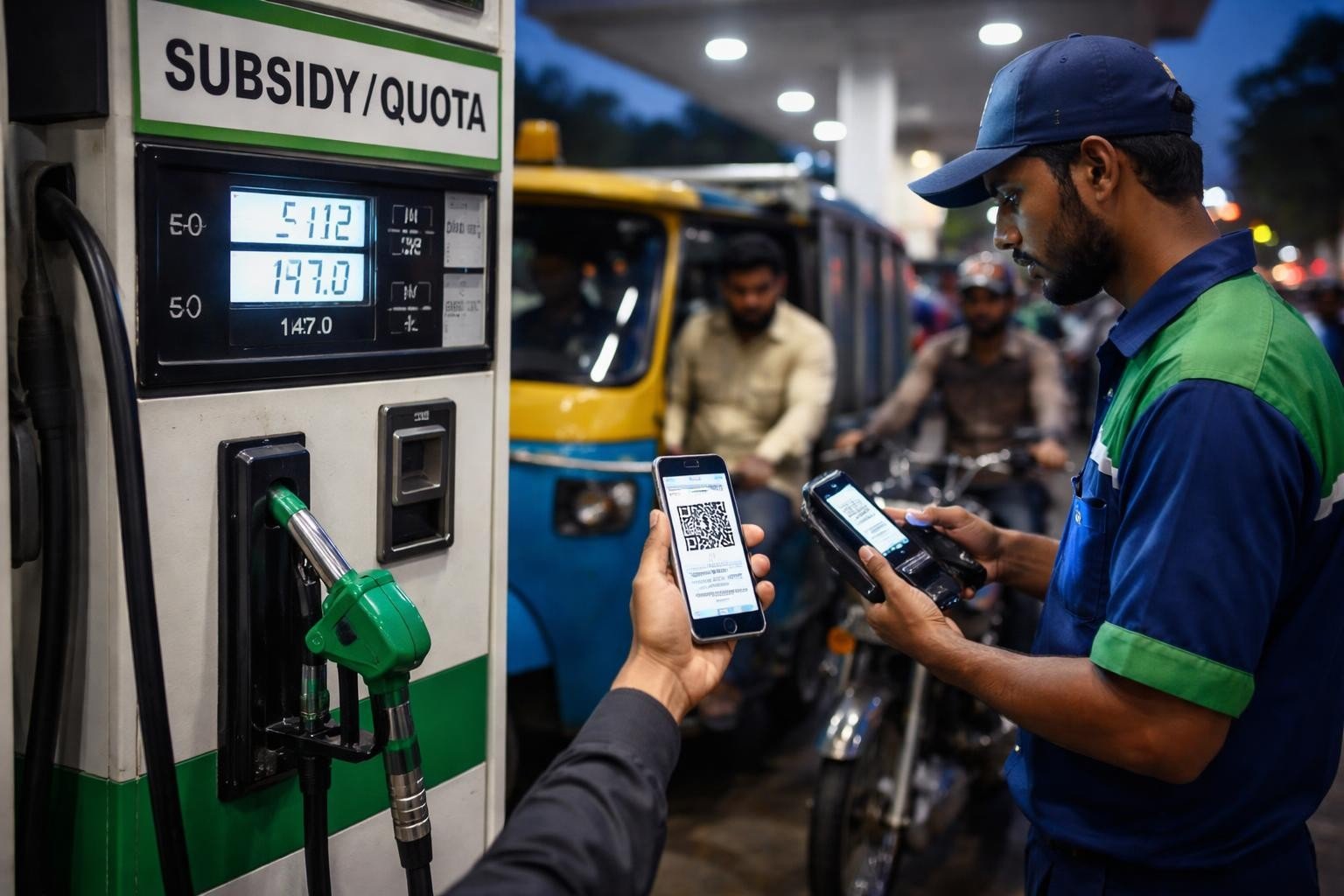
  • End-to-end automation via apps: Retail operators will receive a free, pre-installed app, while consumers will use a separate application to generate and present vouchers.
  • Mandatory devices at pumps: Each retail outlet will be required to have at least two mobile phones to run the system and ensure continuity during peak hours.
  • Subsidised dispensing arrangements: Petrol stations will be required to dedicate specific dispensers/nozzles for subsidised fuel distribution to eligible two- and three-wheelers.

Context and background

Officials linked the fast-tracking of the fuel quota app to disruptions in global oil markets amid the Middle East conflict and shipping paralysis in the Strait of Hormuz, which they said has sent global oil prices “haywire.”

The government previously increased petrol and diesel prices by Rs55 per litre on March 6, then kept rates unchanged for two subsequent weekly revisions, while kerosene and jet fuels rose by about 128% and 150% respectively since the start of the conflict, according to the report.

Earlier this month, Petroleum Division Secretary Hamed Yaqoob Shaikh told the Senate Standing Committee on Petroleum that the government was working on a relief package for motorcyclists and rickshaw drivers following a similar move by the Khyber Pakhtunkhwa government.

Details and evidence

How the quota and voucher system will work

According to an official, vehicle-based quotas will be linked in the user app through a vehicle registration number and the user’s Computerised National Identity Card (CNIC). Final quota limits will be set by the relevant cabinet committee.

Users will generate a digital voucher through the app. Retailers will scan or enter the voucher and the system will automatically validate the remaining quota. If a user requests more than the available quota—such as 20 litres with a 15-litre limit—only the eligible amount would be dispensed. The official said the approach resembled the previously used Ramazan Package model.

Device procurement and compliance requirements for stations

The Ministry of IT has been coordinating with mobile phone manufacturers to provide specialised phones at an initial estimated cost of Rs36,000 per unit, with an estimated retail price of around Rs72,000. Petrol stations have been required to deposit funds in a designated government account for immediate delivery, with Ogra to communicate the account details.

Monitoring and complaint handling

Oil marketing companies (OMCs) will be required to appoint focal persons for each retail site and provide their contact details to Ogra for round-the-clock monitoring and complaint redressal. The focal person information—name, mobile numbers and CNIC—will be available to Ogra, and shared with OMCs and the petroleum division for oversight.

The IT ministry will provide demos and video tutorials for operating the system, while an emergency dispensation process would be available for approvals through a designated procedure.

Pricing and subsidy questions still under review

Officials said subsidies are planned for two- and three-wheelers, but a key decision remains on whether subsidies will extend to four-wheelers or be eliminated. The official said timely pricing was being considered to protect retailers from licensing issues and price shocks, referencing the 2020 crisis.


Current status / What happens next

With testing complete, the government is expected to take a final decision on the scheme’s scope—whether it covers only motorcycles and rickshaws or also extends to smaller cars—along with quota limits to be determined by the relevant cabinet committee.

In parallel, the ministries of finance and foreign affairs are engaged in efforts involving Iran and Saudi Arabia to manage the broader situation, while the quota-based system is being fast-tracked to ensure consistency at pumps and reduce operational discrepancies, officials said.

MORE LIKE THIS

Comments (0)

Leave a comment

A verified Gmail account is required to post comments.

No comments yet. Be the first to share your thoughts!