Andy Burnham set to become UK prime minister Monday
news

Andy Burnham set to become UK prime minister Monday

By Editorial TeamJul 20, 2026 · 8:34 AM4 min read
Burnham will become the UK’s 59th prime minister and the seventh person to move into 10 Downing Street in the past decade
Editorial Team
Editorial Team
Labour leadership win follows Starmer resignation at Palace

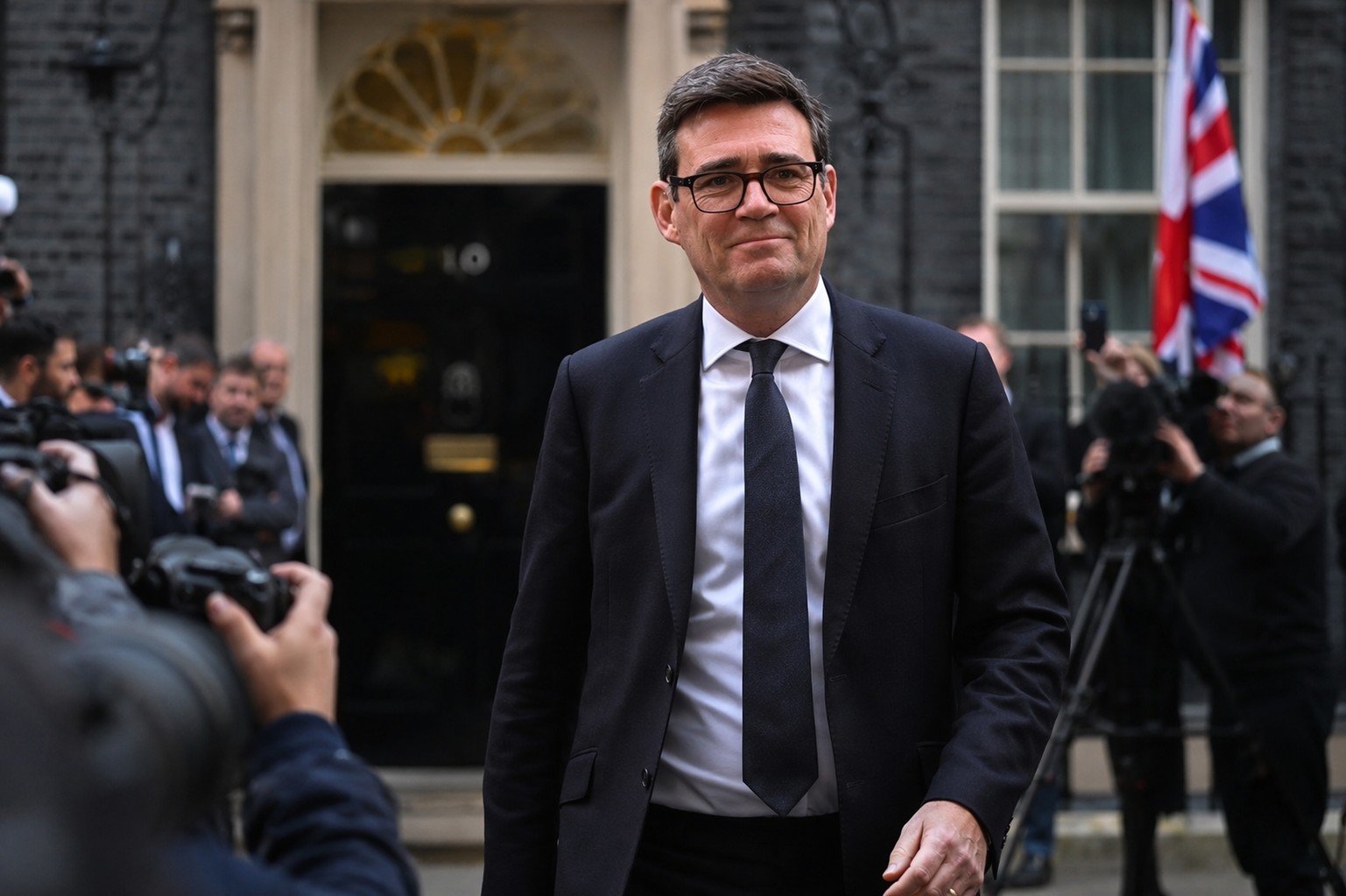
Andy Burnham is expected to become the United Kingdom’s next prime minister on Monday after winning the Labour Party leadership following Keir Starmer’s resignation. Burnham, 56, will take office after Starmer formally tenders his resignation to King Charles III at Buckingham Palace and the King then invites Burnham to form a government.

Burnham will become the UK’s 59th prime minister and the seventh person to move into 10 Downing Street in the past decade.

The change of prime minister will take place quickly under the UK’s parliamentary system, without a general election, because Labour holds a majority in the House of Commons. Burnham is expected to begin appointing a Cabinet immediately, putting his policy priorities and the government’s handling of economic pressures into sharp focus.

How the transfer of power is expected to unfold

  • Keir Starmer is expected to resign in a meeting with King Charles III at Buckingham Palace.
  • The King is then expected to invite Andy Burnham to Buckingham Palace and ask him to form a government, with Burnham becoming prime minister upon accepting the invitation.
  • The private audience is traditionally referred to as “kissing hands”, although modern prime ministers simply greet the monarch.
  • Burnham is expected to travel to 10 Downing Street to deliver his first remarks as prime minister.
  • He is expected to begin appointing senior ministers, including the chancellor, foreign secretary and home secretary, with the new government taking office immediately and without an inauguration or parliamentary confirmation vote.

Political context behind the leadership change

Burnham previously served in several Labour governments before leaving Westminster in 2017 to become mayor of Greater Manchester. He became one of Britain’s best-known regional politicians during the COVID-19 pandemic, earning the nickname “King of the North” for his outspoken defence of northern England and his campaigns for greater regional investment.

Starmer announced on June 22 that he would step down as Labour leader after less than two years in office. His premiership faced mounting pressure amid political controversies, including his decision to appoint Peter Mandelson as Britain’s ambassador to the United States despite Mandelson’s close ties to the late sex offender Jeffrey Epstein.

Pressure intensified after Labour suffered heavy losses in local elections in May. After Burnham returned to Parliament by winning a by-election, many Labour MPs rallied behind him as Starmer’s successor.

In Britain’s parliamentary system, a change of leader inside the governing party can bring a new prime minister without a general election. The monarch appoints as prime minister the person most likely to command a majority in the House of Commons, which normally means the leader of the largest governing party.

The formal handover is expected on Monday, 20 July 2026, following the standard Downing Street and Palace sequence: the outgoing prime minister resigns to King Charles III, who then invites the incoming Labour leader to form a government.


What is known about Burnham’s mandate and early priorities

Starmer’s resignation triggered a Labour leadership contest under party rules requiring candidates to secure backing from at least one-fifth of Labour MPs. Burnham met that threshold and was elected unopposed after no other candidates stood.

During his leadership campaign, Burnham highlighted what he described as an approach distinct from Westminster politics, saying:

“When I said I was going to do politics differently, I meant it.”

In his first speech as Labour leader, he promised “a new path” focused on affordability and reducing regional inequalities. He said:

“This change today is the most significant moment in our politics for 40 years. It will take us to a country where life is more affordable and all people and places are lifted from where they are now.”
He also pledged:
“I will be a leader for the North, the South, the East and the West, for Scotland, Wales and for Northern Ireland.”

Full Fact has rebutted online claims that Burnham cannot legally become prime minister, noting there is no requirement for a prime minister to have personally won a general election, so long as they can command confidence in the House of Commons.

Labour’s official statement announcing Burnham as party leader also published his first address, providing the party’s formal confirmation of the leadership result ahead of the King’s appointment process.

Immediate next steps and what to watch

Once Burnham accepts the King’s invitation, he is expected to move quickly to assemble a Cabinet and begin work from 10 Downing Street. The transition is typically completed within hours and is usually broadcast live on television.

According to multiple media reports, one early decision being closely watched is whether Burnham moves to place Thames Water into a Special Administration Regime, which would bring the company under temporary public control while it is restructured. Further announcements are expected after ministerial appointments are confirmed.

MORE LIKE THIS

Comments (0)

Leave a comment

A verified Gmail account is required to post comments.

No comments yet. Be the first to share your thoughts!